Power Electronics for Safety-Critical Systems
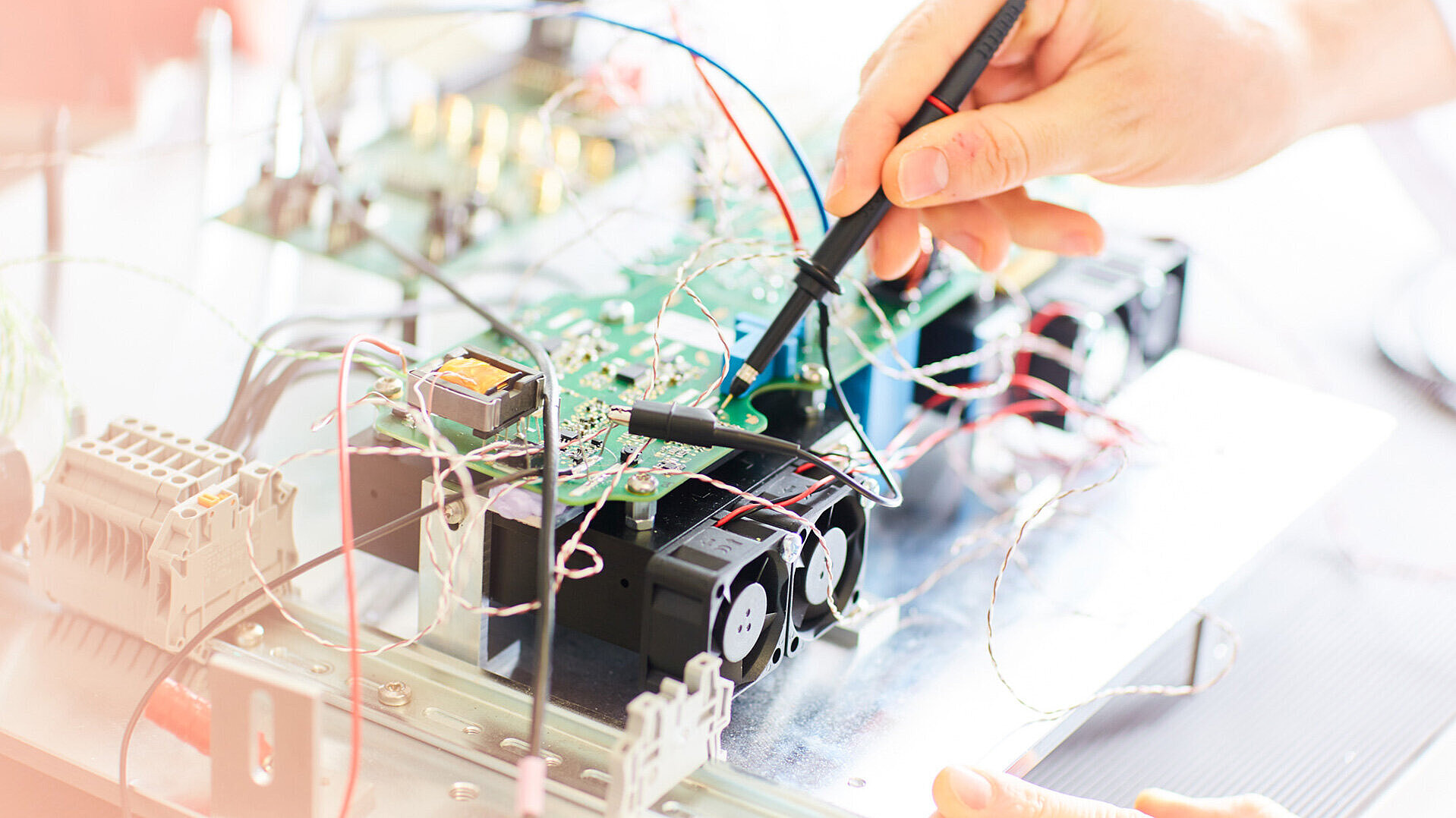
Development Partner for Safety-Critical Power Electronics
For more than 25 years, Silver Atena has stood for technological excellence in electronic systems and control units.
In the field of safety-critical power electronics, we develop high-voltage systems in the 400–800 V range for Automotive, Aerospace and Defence.
As a development partner for high-voltage and high-power power electronics above 100 kW, we assume end-to-end system responsibility.
From architecture definition through hardware and software development to verification, validation and series production.
What is power electronics?
Power electronics is the technology for the efficient conversion, regulation and control of electrical energy in applications involving high power levels or voltages.
It forms the technical foundation of modern electric drive systems, particularly in safety-critical environments.
Safety-critical applications are systems in which malfunctions can have direct effects on personal safety, system integrity or operational capability.
These include high-voltage drive systems in vehicles, electric drives and actuators in aviation, and robust electric propulsion solutions in the defence sector.
Power electronics fulfils two central functions:
- Energy Conversion
It converts between different voltage levels and from direct current (DC) to alternating current (AC).
Typical topologies include DC/DC converters, DC/AC inverters, AC/DC rectifiers and AC/AC converters.
With efficiencies exceeding 98%, power electronics from Silver Atena enables high efficiency while minimising losses. - Precise Power Control
In interaction with embedded control software, it controls motors and actuators in real time with high dynamic response and control accuracy.
It translates digital control commands into physical drive power.
In doing so, it defines torque, speed and response behaviour of electric drive systems.
Its effect unfolds through interaction with the overall architecture of hardware, software and system integration.
Why is Power Electronics in High-Voltage Systems Safety-Critical?
Without modern power electronics, electrification is not feasible.
This applies to battery electric vehicles (BEV), fuel cell electric vehicles (FCEV) and hybrid vehicles (MHEV/PHEV).
It also applies to eVTOL systems (electric vertical take-off and landing), hybrid and fully electric aircraft, as well as electric defence propulsion systems.
Power electronics directly influences:
- efficiency and range
- dynamic performance and control behaviour of electric drives
- thermal stability and service life under continuous load
- reliability under real operating conditions
- integration effort
In safety-critical applications, it determines whether an electrical system remains permanently stable, controllable and operational under defined boundary conditions.
Errors in design, dimensioning or integration directly endanger efficiency, stability and safety.
Typical consequences in safety-critical development projects include thermal derating and delays in safety certification.
Series adjustments with increased cost and schedule risks are also possible.
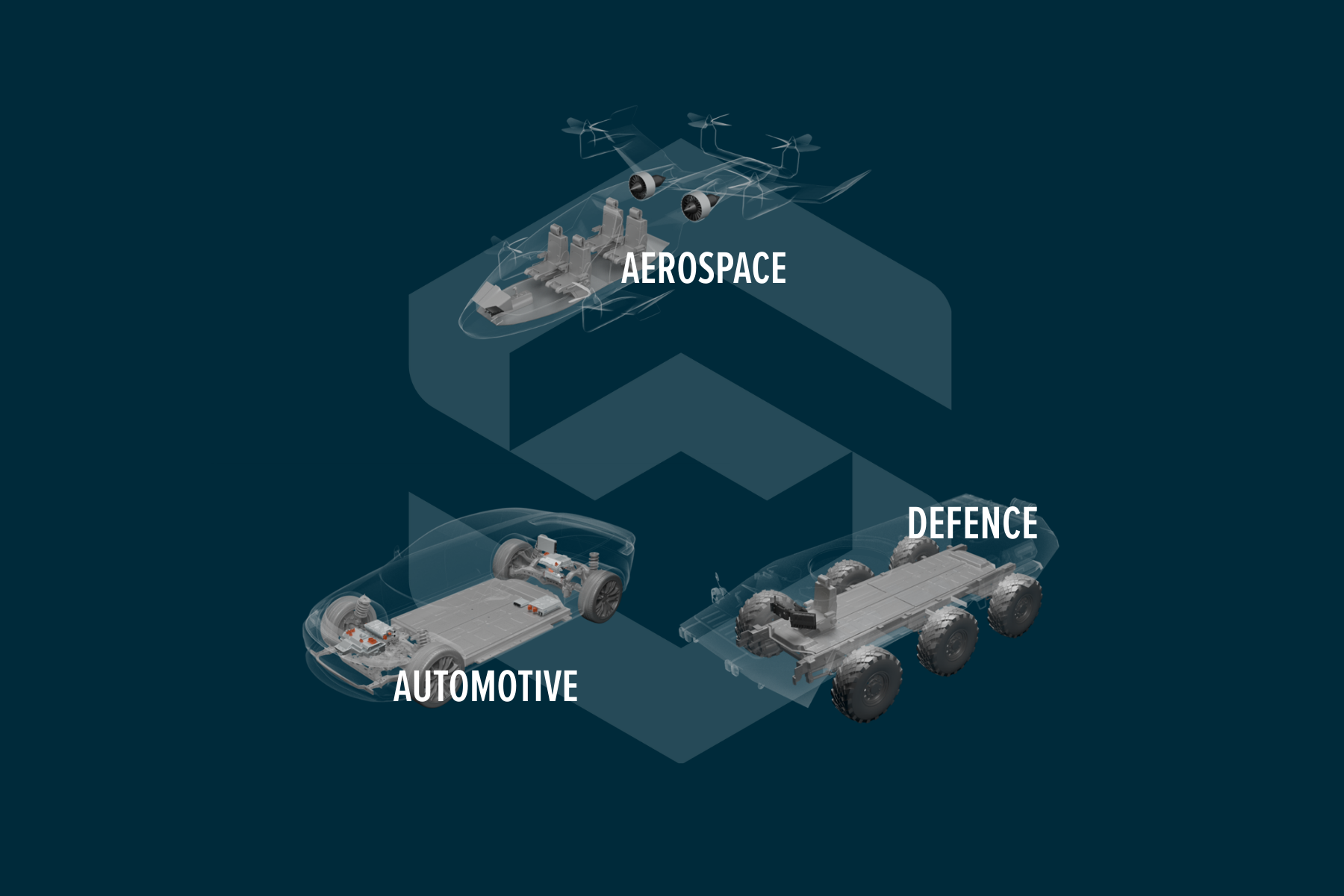
Power Electronics for Automotive, Aerospace and Defence
Power electronics is the architecture-relevant core system of high-voltage electric propulsion systems.
It not only performs energy conversion.
It also influences the design of the entire drivetrain.
This includes selection of circuit topology and power semiconductors, definition of the control strategy, and thermal, mechanical and EMC integration.
The focus lies on architecture definition.
This is complemented by the design of modern power semiconductors and topologies, the development of highly dynamic control algorithms, and robust integration into safety-critical overall architectures, including functional safety.
Automotive
In electric vehicle architectures, power electronics performs central energy conversion and drive control in the 400–800 V high-voltage range.
It influences efficiency, dynamics, thermal stability and EMC-compliant system integration.
Silver Atena develops, among others:
- High-voltage traction inverters (400–800 V)
- DC/DC converters for coupling high-voltage and low-voltage vehicle electrical systems
- DC boost chargers for 400 V / 800 V charging infrastructure
- Power stages for electric auxiliary units (e.g. ePTO, electric turbochargers)
Development includes system architecture, topology selection, power semiconductor design, control development, thermal design, EMC integration and functional safety up to ASIL D.
The objective is robust, production-ready high-voltage power electronics with high power density and reliable integration into complex vehicle architectures.
Aerospace
In electric aviation systems, power electronics is a safety-critical core system.
Key requirements include robustness, redundancy concepts, deterministic system behaviour and certifiability.
Developed applications include:
- Propulsion inverters for electric FAN systems
- Electric FAN systems
- Electric propeller drives in the 10–500 kW range
Development takes place within aviation-specific design assurance processes up to DAL A in accordance with DO-254 / DO-178C.
In addition to efficiency and power density, the focus lies on robust system architecture and thermal stability under highly variable environmental conditions.
Equally important is structured and traceable verification.
Defence
In defence applications, the focus lies on robust power electronics design under extreme environmental and operational conditions.
Examples include:
- Electric FANs for UAV/UAS platforms
- Electrified auxiliary units and auxiliary drives
- Mobile or integrated energy systems
Mechanical resilience, extended temperature ranges and EMC hardening are decisive.
Resistance to voltage spikes and load transients, as well as long-term reliability under extreme operating conditions, are equally critical.
The development ranges from architecture definition through the design of power semiconductors and control systems to qualified integration and validation.
Cross-Industry Development of Safety-Critical Power Electronics
The physical principles of power electronics are identical across industries.
However, the specific system requirements differ significantly.
- Automotive
Typical voltage levels range from 400–800 V in the high-voltage vehicle electrical system, with power levels above 100 kW.
In addition to efficiency and power density, EMC integration into the overall vehicle architecture and functional safety up to ASIL D are decisive. - Aerospace
Electric propulsion systems in the 10–500 kW range.
Key aspects include power-to-weight ratio, redundancy concepts and certification requirements up to Design Assurance Level DAL A (in accordance with DO-254 / DO-178C). - Defence
Systems require robust design for extended temperature ranges and high mechanical resilience.
EMC hardening and long-term reliability under extreme operational conditions are central.
Experience from high-voltage series applications (>100 kW, 400–800 V) is combined with structured safety methodology from ASIL D and DAL A projects.
The objective is robust, verifiable and certifiable systems.
This cross-industry experience safeguards architectural decisions at an early stage.
Technical risks are reduced already during the concept phase.
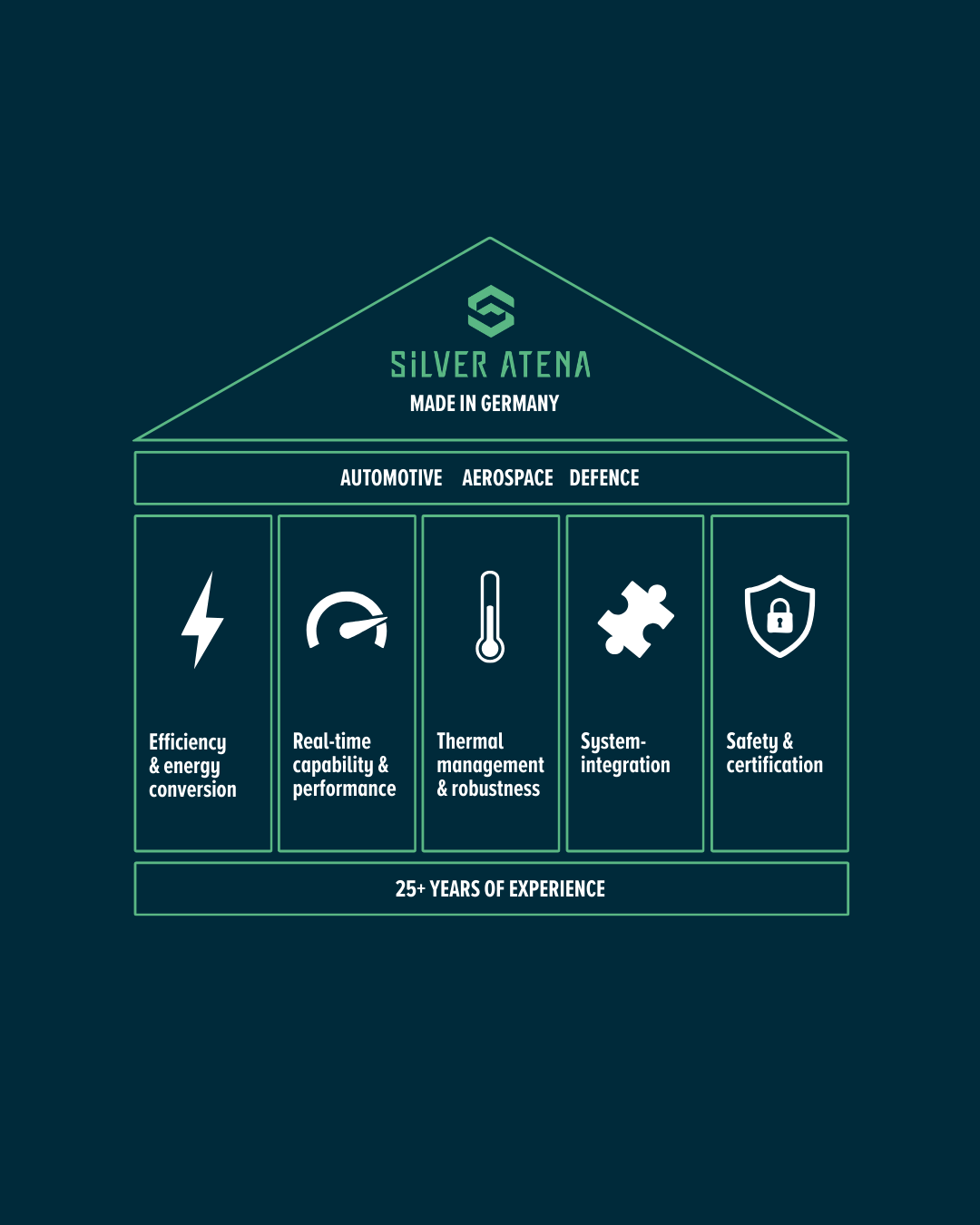
Technological Competence in Power Electronics
Silver Atena develops power electronics with technological depth and full system responsibility:
- Efficiency & Energy Conversion
Design, dimensioning and optimisation of power semiconductors, circuit topologies and control strategies for high-power applications above 100 kW.
Focus: efficiency, power density and EMC stability. - Real-Time & Performance
Development of highly dynamic control algorithms for precise control of motors and actuators, including fast current control loops and efficient modulation methods. - Thermal Management & Robustness
Development and validation of thermal concepts for continuous operation, cyclic loading and demanding environmental conditions, taking ageing and derating into account. - System Integration
Holistic integration considering electromagnetic compatibility (EMC), communication interfaces, diagnostic functions and overall architecture. - Safety & Certification
Development within the framework of functional safety requirements up to ASIL D (ISO 26262) and DAL A (DO-254 / DO-178C), including safety analyses, evidence generation and structured verification.
Development is carried out end-to-end.
From system architecture through detailed design and implementation to verification and validation under real operating conditions.
Advantages of System Responsibility in Power Electronics
End-to-end system responsibility in power electronics creates tangible technical and project-specific advantages for our customers:
- fewer iteration loops through early architecture and topology decisions
- reduced EMC and thermal risks through integrated design of power stage, control and cooling concept
- clear and defined interfaces between inverter, control unit and overall architecture
- structured and auditable safety documentation up to ASIL D or DAL A
- stable continuous operation through validated thermal concepts and derating strategies
- scalable transition from prototype development to series production
Power electronics therefore does not become an integration risk.
It becomes a technically controlled, safeguarded and long-term stable system component.

Why Silver Atena as a Development Partner for Power Electronics?
As a development partner for high-voltage and high-power applications, Silver Atena assumes full system responsibility in power electronics.
From architecture definition through design and safety verification to series implementation.
Silver Atena has extensive experience in developing high-voltage inverters and complex power electronic systems above 100 kW.
Power electronics is not regarded as an isolated assembly, but as an architecture-relevant core system of the overall electrical system.
EMC design, thermal dimensioning and functional safety up to ASIL D (ISO 26262) or DAL A (DO-254 / DO-178C) are integral parts of the development process.
Development-accompanying verification and validation are equally integral components.
- Architecture and System Responsibility
Topology, switching strategy and control concept are designed consistently at system level.
Thermal validation, EMC integration and safety are incorporated from the outset.
Interfaces with the vehicle, aircraft or overall system architecture are considered at an early stage. - High-Voltage and High-Power Applications
Experience in 400–800 V high-voltage architectures and power levels above 100 kW.
For primary electric drives, propulsion systems and auxiliary units.
Development within the framework of safety-critical requirements up to ASIL D and DAL A.
- Development-Accompanying Verification
Safety analyses such as FMEA (Failure Modes and Effects Analysis) and FMEDA are integral parts of the development process.
Thermal design validation, EMC safeguarding, as well as continuous load and temperature testing are carried out close to the project.
Validation takes place in parallel with system design, not only after prototype completion. - Production-Oriented Implementation
Architecture and design decisions take manufacturability, scalability and reproducible quality into account at an early stage.
This creates technically stable and long-term industrialisable solutions.
Arrange an Initial Technical Consultation for Power Electronics
Are you planning the development of a power electronics system or facing architecture-relevant integration decisions?
Silver Atena supports you from system design through development, verification and validation to series production – with technical depth, system responsibility and cross-industry experience.