EMC and Thermal Management for Electronic Systems
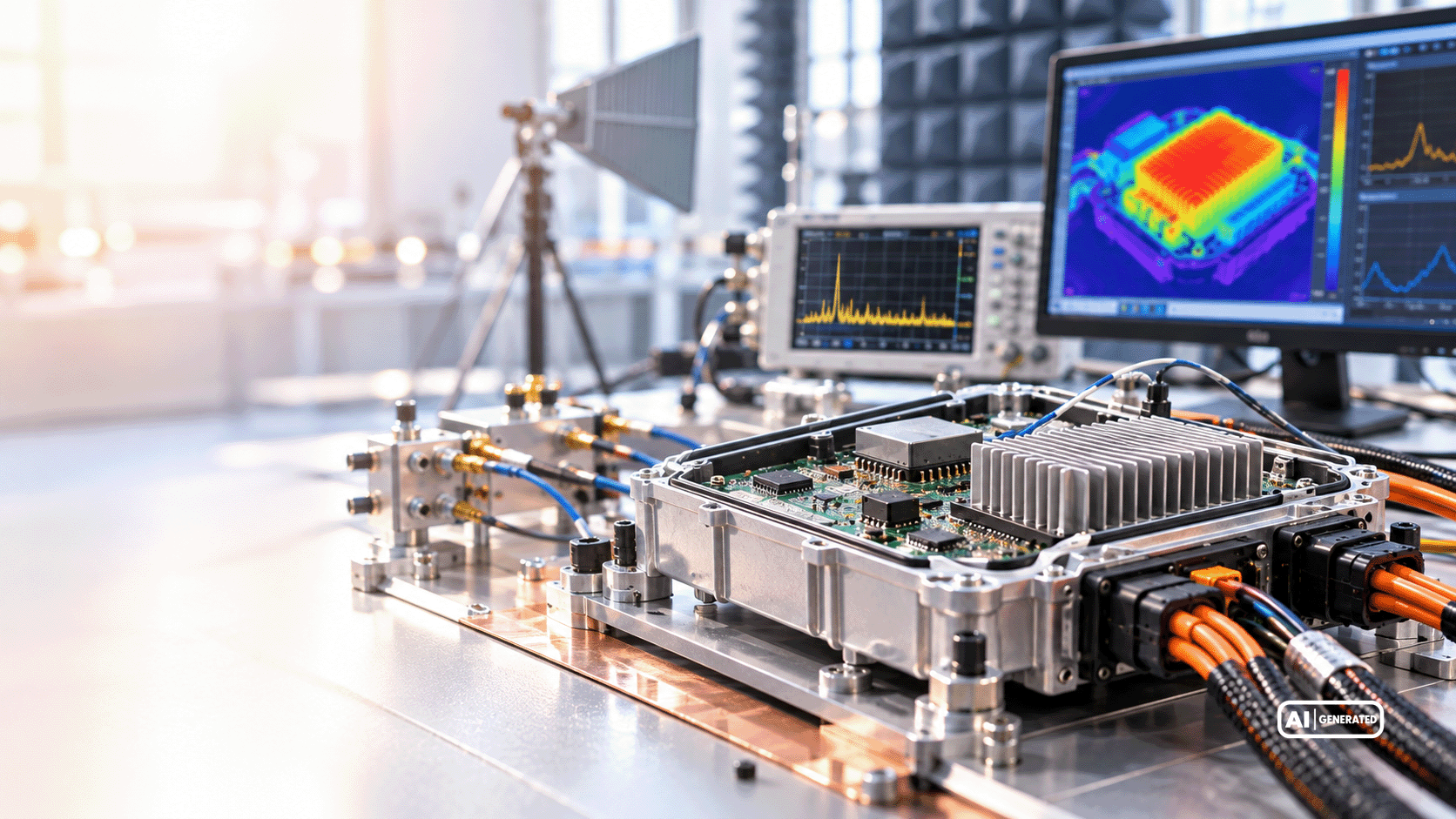
Limiting interference and controlling heat
Electronic systems must operate reliably under their intended operating conditions. Two questions shape their development in particular: what interference does the device emit, and how does it behave when exposed to external electromagnetic influences? And do its components remain within their permissible temperature limits in the required operating states?
Silver Atena considers EMC and thermal management as early as the design of electronic systems. Requirements are translated into circuit, layout, enclosure and cooling concepts. Simulations, measurements and pre-compliance testing during development help to identify critical points and improve the design before the planned formal tests take place.
Why EMC and thermal behaviour need to be clarified early
Electromagnetic interference can affect a product’s communication, sensor signals or control functions. At the same time, a device can itself generate interference that is relevant to other components. Whether and how interference has an effect depends on its source, its coupling path and the susceptibility of the function concerned.
Thermal design focuses on a different chain of effects: components generate heat losses that must be dissipated via the circuit board, the enclosure and, where applicable, a cooling system. If components exceed their permissible temperature limits, performance and reliability can be impaired or failures can occur.
Power electronics in particular combine both challenges. Fast switching can promote electromagnetic interference, while losses arise that must be managed thermally. Decisions on components, layout, cable routing, shielding and cooling influence one another. If EMC or thermal behaviour is only considered once the product is finished, extensive changes to the hardware or enclosure may be required.

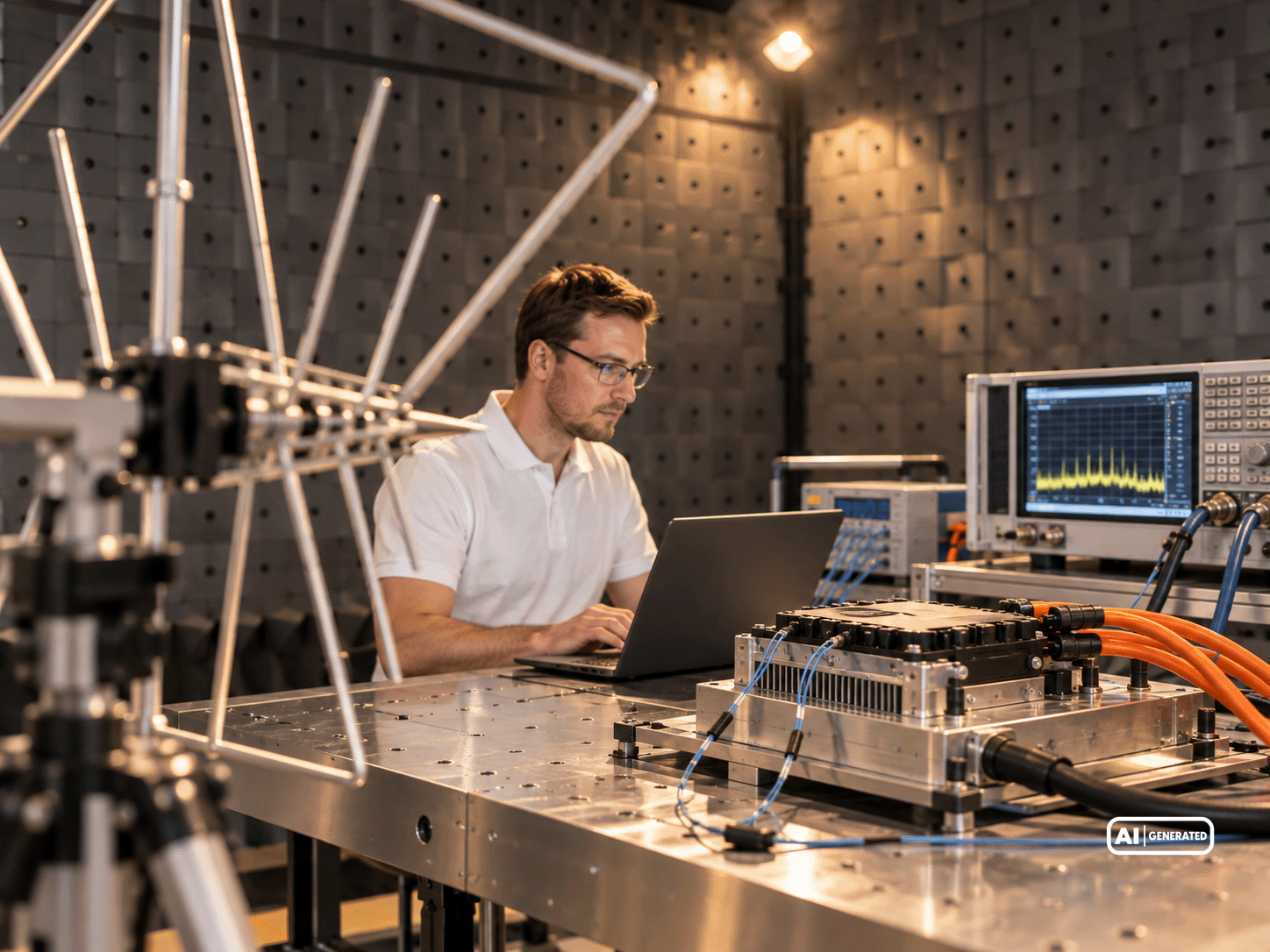
Services in EMC design and thermal management
Silver Atena takes project-specific EMC and temperature requirements into account when developing control units, power electronics and drive systems. The starting point is the requirements of the overall system: the functions to be protected, the expected sources of interference, and heat generation and permissible temperatures in the individual operating states. From this, concepts for shielding, filtering, grounding and cooling are developed in coordination with system architecture, hardware and mechanics.
The focus is on design and optimisation during development. Formal testing and verification are carried out by environmental testing and qualification.
Analysing sources of interference and coupling paths
Targeted EMC measures require a clear understanding of where interference originates and how it reaches the function concerned. Silver Atena examines sources of interference, cable and ground routing, interfaces and coupling paths, for both emissions and immunity. Which paths are critical depends on the architecture, operating states and installation situation.
Developing filter, shielding and grounding concepts
Filters, shielding and grounding concepts are only effective if they match the circuit, interfaces, enclosure and connectors. Silver Atena develops them together with the hardware and mechanical design, taking the PCB layout and component placement into account. This means EMC requirements are built into the design early on. It reduces the risk of having to implement additional measures or extensive changes to the circuit, layout and enclosure later.
Simulation, measurement and EMC pre-compliance testing
Simulations and measurements during development help to investigate interference paths and compare the effect of changes. Our own EMC pre-compliance testing makes it possible to identify critical points in a development stage early on. It does not replace the formal EMC tests.
Assessing power loss and critical temperatures
Silver Atena analyses where heat is generated in which operating states, including unfavourable operating cases relevant to the project. We consider the relevant heat paths from the components via the circuit board, mechanical connections and enclosure to the environment or the coolant. These help to determine how components are arranged and how mechanical parts are designed.
Cooling concepts and thermal simulation
Cooling concepts for the respective product are developed on the basis of the requirements. Thermal simulations help to assess temperature distributions and potential hotspots during development. Depending on the application, we consider steady-state and transient operating states. The results feed into the selection and placement of components and into the design of the enclosure and cooling paths. Measurements on suitable development stages are used to verify the calculated temperatures and the boundary conditions on which they are based.
Taking derating and component stress into account
During design, we take into account permissible component stress and project-specific derating requirements. We can design temperature, voltage, current or power with defined margins to the permissible limits. Where necessary and compatible with the functional requirements, we limit the available system power as a function of temperature. The thermal assessment shows where components are particularly stressed and whether the design needs to be adapted. The aim is to reconcile the specified function with the reliability requirements.
Development process for EMC and thermal design
The process begins with the system requirements and the intended operating and ambient conditions. From these, Silver Atena derives EMC and thermal requirements for the components involved. Potential sources of interference, sensitive interfaces and heat sources are considered as early as the architecture and hardware concept stage.
As the circuit, circuit board and enclosure take shape, the concepts become more specific. Simulations and calculations support the design. Measurements and pre-compliance tests follow on samples and development stages. If an anomaly appears, its cause is investigated: does it lie in a circuit, a coupling path, the component placement or the heat transfer?
The findings feed back into design changes. It is then reassessed whether the measure achieves the desired effect and whether it affects other requirements. This process links development with subsequent qualification without anticipating the formal tests.
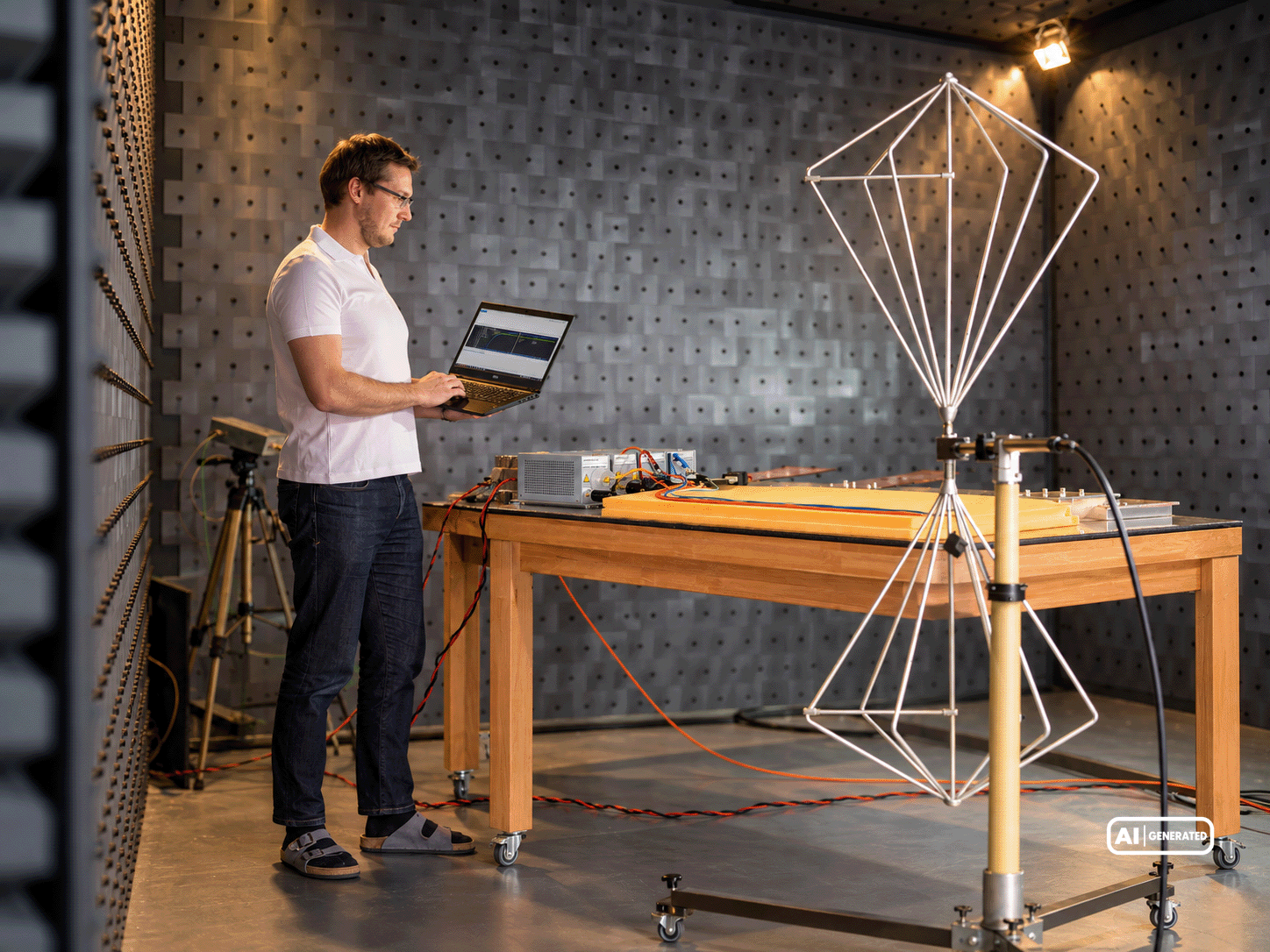
Standards and test requirements for EMC and thermal design
The EMC requirements a product must meet depend on the industry, the application and customer specifications.
In the automotive sector, relevant standards may include CISPR 25 for assessing emissions to protect on-board radio receivers, the applicable parts of ISO 11452 for the immunity of electronic components to radio-frequency electromagnetic disturbances, and ISO 7637 for electrical transients. The applicable parts, editions and test conditions depend on the respective product and project. ISO 16750-4 covers climatic loads on electrical and electronic vehicle equipment. Together with component limits, power losses and cooling conditions, the temperature requirements of the application form the basis of the thermal design.
For airborne equipment, RTCA DO-160 may specify environmental and EMC test procedures. In defence projects, requirements from MIL-STD-461 may apply, for example. Standards from the IEC 61000 series may be considered depending on the product and area of application.
These standards cover different test subjects. They do not apply across the board to every product. Silver Atena takes the specified requirements into account during development; formal verification is carried out in the planned qualification programme.
EMC and thermal management in automotive, aerospace and defence
Silver Atena develops each solution from the specific mission profile.
Automotive
In automotive applications, compact installation spaces, electrical interfaces and, depending on the product, high power levels or demanding ambient temperatures come together. The EMC and thermal design must suit the control unit, its installation situation and the applicable requirements.
Aerospace
In aerospace projects, low mass, limited installation space and high demands on verification can shape technical decisions.
Defence
For defence applications, the focus is on project-specific electromagnetic and thermal loads and the required robustness.
Your benefits from early EMC and thermal design
Identifying critical interference paths and thermal hotspots during development makes it possible to work specifically on the circuit, layout, enclosure or cooling. This reduces the risk of having to change fundamental parts of the design only at a late test.
A coordinated design also supports the performance and reliability of the product. EMC and thermal requirements are not treated as separate tests after the fact, but influence the decisions from which the system emerges. Pre-compliance testing during development makes it easier to assess the status before formal qualification.
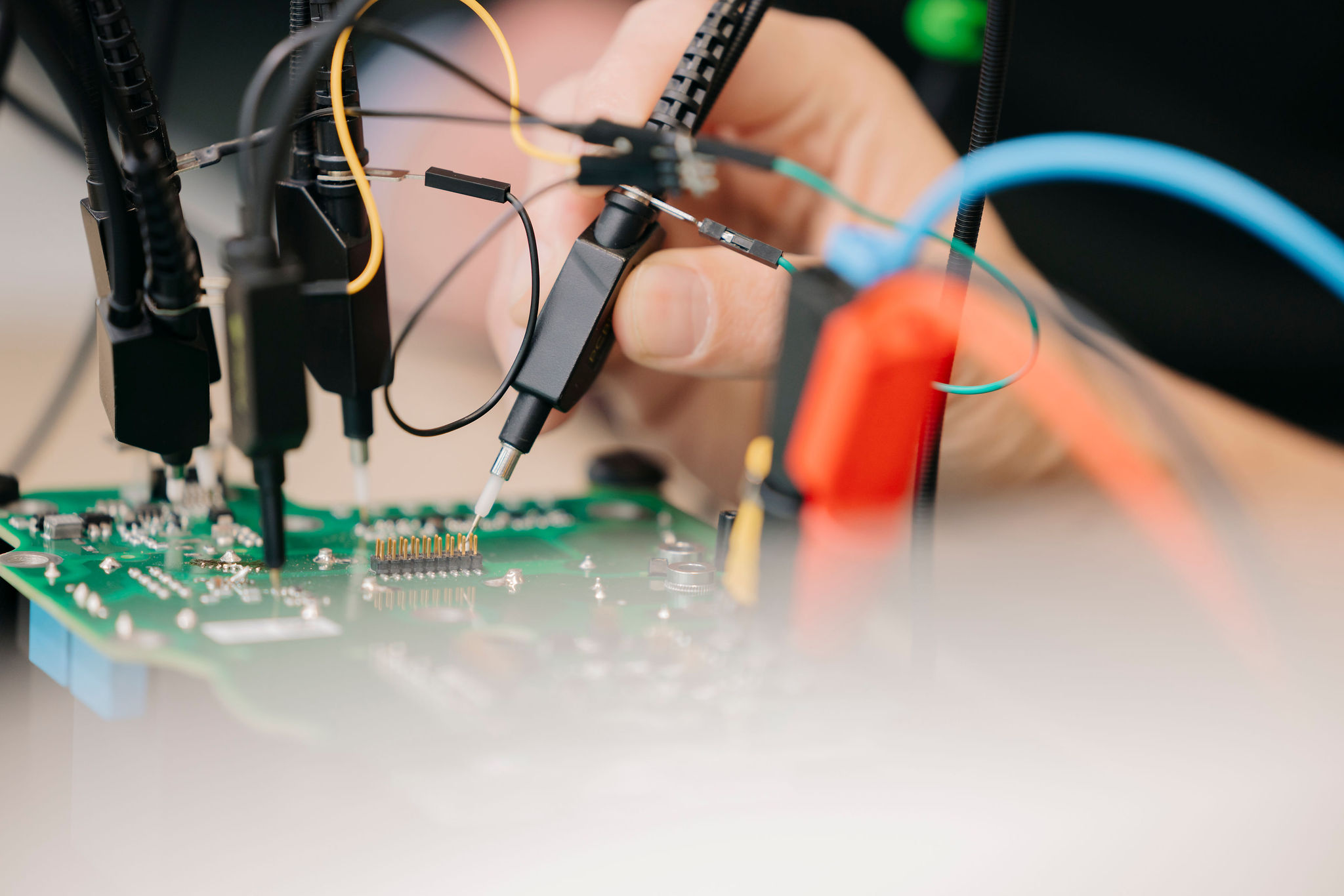
EMC and thermal management in interaction with hardware, mechanics and qualification
EMC and thermal behaviour cannot be limited to a single component. System architecture defines interfaces and operating conditions. Hardware development implements the circuit and circuit board. Mechanical and enclosure development influences shielding, installation and heat dissipation. In power electronics products, the characteristics of the power stage and its control also come into play.
Environmental testing and qualification later tests the product under the specified conditions and documents the required evidence. Findings from pre-compliance testing and qualification are fed back into development. In this way, EMC and thermal issues can be addressed in the context of the entire product.
Why Silver Atena for EMC and thermal management?
Silver Atena develops electronic systems from architecture through hardware and mechanics to testing. This means EMC and thermal decisions can be coordinated with the departments that implement them in design and electrical terms. Our work on control units and highly dynamic power electronics brings experience with products in which switching behaviour, power loss and installation space have to be considered together.
EMC pre-compliance testing during development supports optimisation. Silver Atena can plan, carry out or support formal qualification depending on the project scope. The exact scope depends on the product and project requirements.

Clarify EMC and thermal requirements for your product early on
Are you developing a control unit or a power electronics system with demanding EMC or temperature requirements? Silver Atena helps you assess critical influences during development and work out suitable measures for hardware, enclosure and cooling.