Hardware development for control units and electronic systems
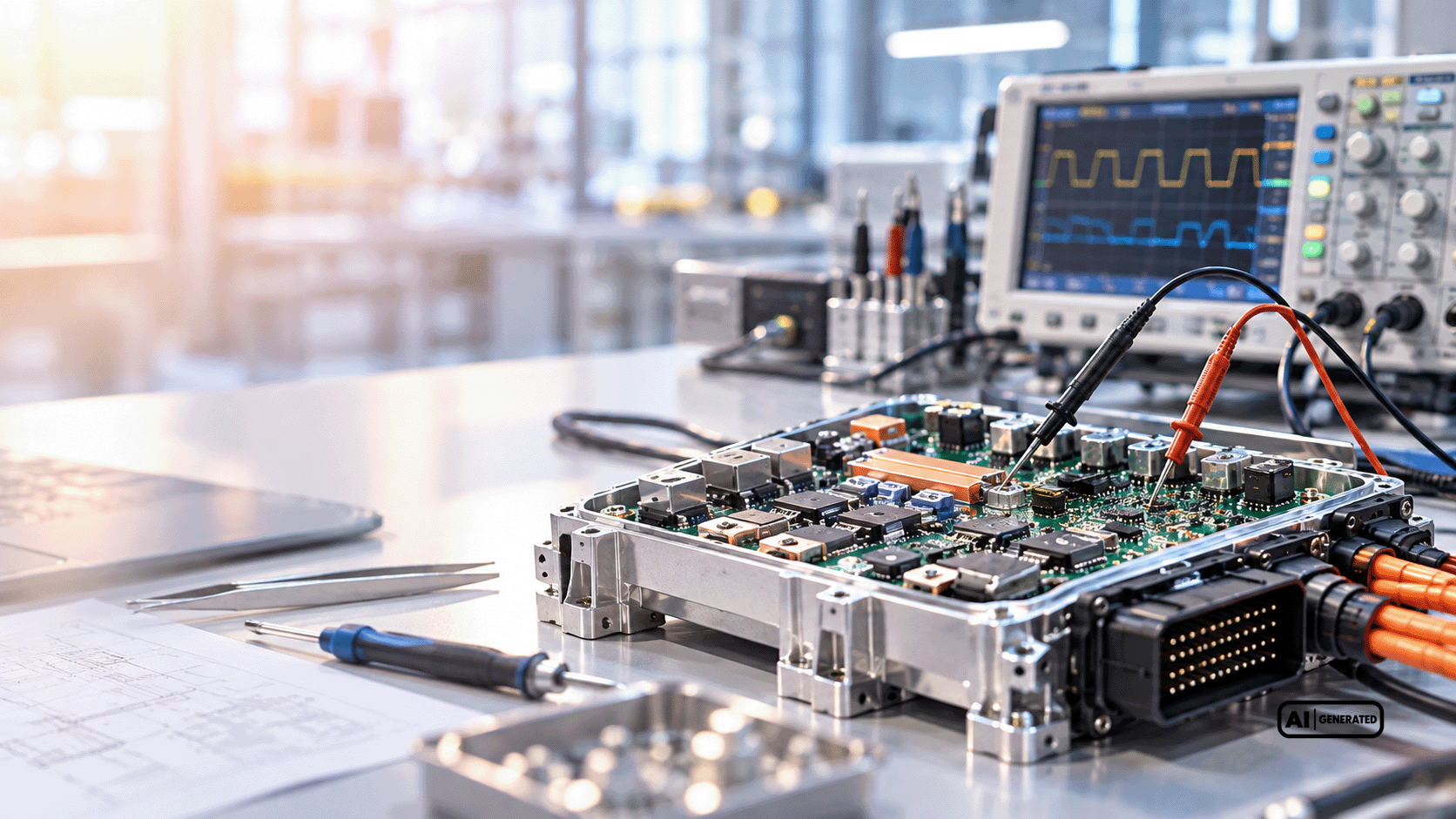
Developing electronic hardware for demanding applications
A circuit must operate reliably under the intended operating conditions. Components must be designed appropriately from both an electrical and thermal perspective. The PCB must fit within the available installation space and housing. Interfaces connect the electronics with sensors, actuators and other system components and provide the basis for interaction with the embedded software.
Silver Atena develops electronic hardware for control units and other demanding systems. We develop circuit concepts, select components, support PCB design and commission prototypes. From an early stage, we consider how the hardware can be integrated into the product, tested and subsequently manufactured.
Challenges in hardware development: installation space, EMC and thermal management
Installation space, costs, component availability, power dissipation and electromagnetic compatibility all influence the same design decisions. A component may be electrically suitable while also generating heat that is difficult to dissipate within the housing. Changing its position on the PCB can, in turn, affect signals or interfaces.
There are also requirements relating to diagnostics and safety. Protective functions can only be implemented if the necessary hardware is provided. Errors in component selection or design can therefore have effects far beyond an individual circuit.
Hardware development must consider these conditions together - from the initial concept through to measurements on the assembled prototype.
- Electrical function
Circuits and components are designed for the required functions and operating conditions. - Space and thermal behaviour
Installation space, component placement and thermal load influence one another and must be coordinated with the mechanical design. - Interference and interfaces
Communication, sensor and power interfaces must function within the overall system. EMC requirements are therefore considered at an early stage. - Manufacturing and testing
A design must not only be developed, but also be possible to build, commission and test.

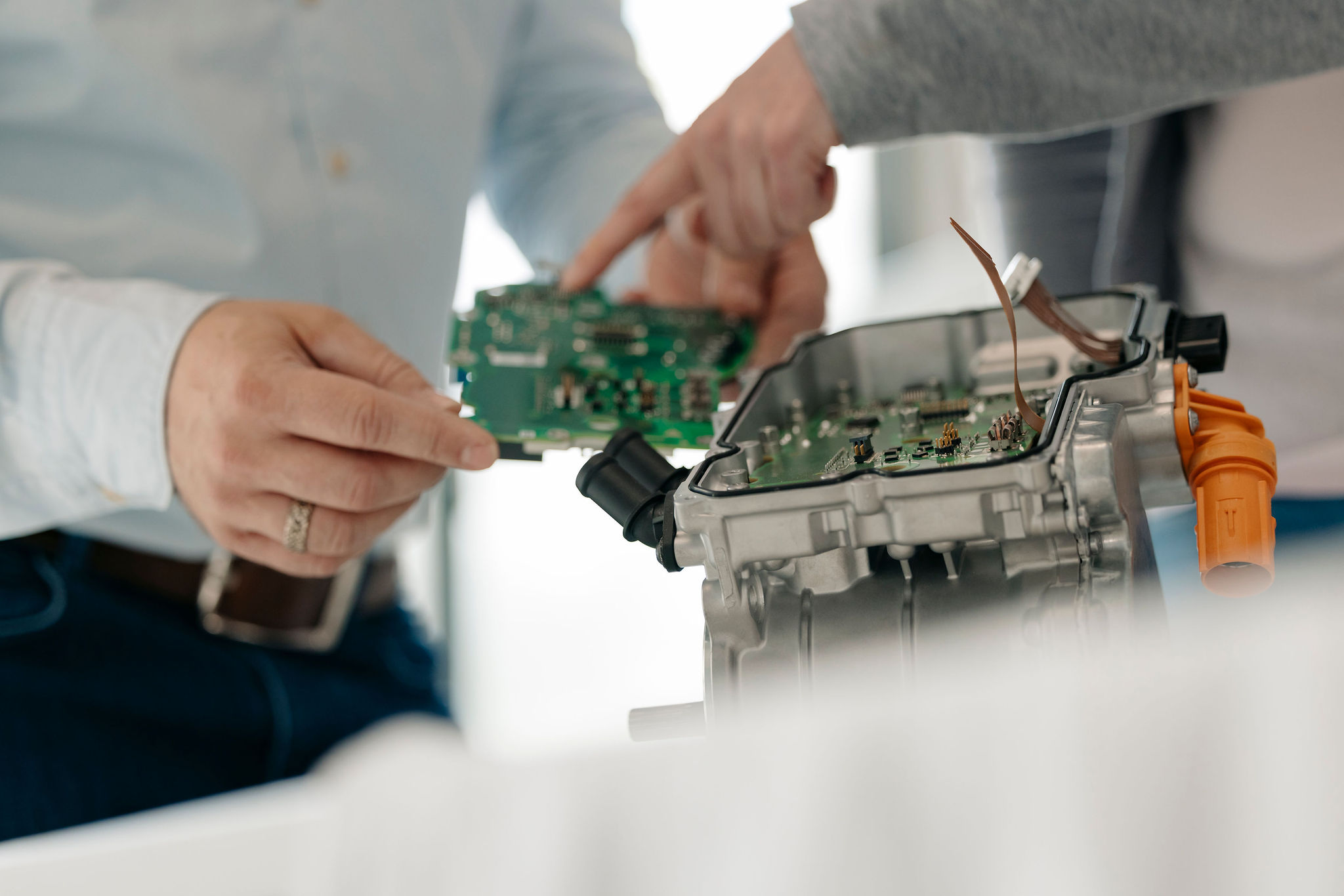
Our hardware development competences
Silver Atena develops analogue and digital electronics as well as the electronic basis for customer-specific control units. This includes microcontrollers, communication and sensor interfaces, power supplies, and protection, measurement and diagnostic functions. Depending on the product, power electronic circuit sections may also be included.
The hardware is developed in coordination with systems engineering, embedded software, mechanical engineering, safety and test. For example, a requirement for a diagnostic function can already be considered during circuit design, while the mechanical design takes installation space and heat dissipation into account.
Hardware concept and circuit design
We derive an electronic concept from the system and hardware requirements. We define which circuits and interfaces are required to provide the specified functions and develop the hardware details from this basis.
Component selection, calculation and simulation
Microcontrollers, semiconductors and other components are selected to suit the respective task. Calculations and simulations support the design process. In addition to electrical function, tolerances, thermal load and component availability are also taken into account.
Schematic and PCB design
Silver Atena creates schematics and supports PCB design. The arrangement and routing of electrical connections are considered with regard to function, installation space, thermal behaviour and EMC requirements.
The mechanical integration of the electronics is coordinated with mechanical and enclosure development.Protection, measurement and diagnostic functions
Overvoltage, overtemperature or faulty signals can influence system behaviour. Depending on the application, suitable measurement, protection and diagnostic functions are incorporated into the hardware and coordinated with software and functional safety.
Prototype commissioning and hardware testing
- Once the first assemblies are available, our engineers verify the electrical function through measurements and tests. Deviations are analysed and, where necessary, fed back into the design. We also support the integration of the hardware into the overall system and the preparation for qualification and transfer to series production.
Hardware development from concept to transfer to series production
The process depends on the product and project. However, certain questions recur in every hardware development project: What does the electronics need to achieve, how will it be implemented, and what do the measurements on the real device show?
- Translate requirements into a hardware concept
We examine which functions the hardware must provide and which electrical, mechanical and safety-related boundary conditions apply. This forms the basis for the hardware architecture and key interfaces. - Design the circuits
The required circuits are developed, components selected, and critical properties calculated or simulated. Tolerances and potential loads are also considered. - Support PCB design
The schematic is translated into an implementable PCB design. Placement and layout decisions are coordinated with requirements relating to EMC, thermal behaviour, installation space and manufacturing. - Commission the first assemblies
Power supplies, signals, interfaces and other functions are checked on the prototype. Measurements show where the circuit operates as intended and where adjustments are required. - Integrate the hardware into the product
The electronics are integrated with software, mechanical components and other system elements. Findings from integration and testing are taken into account during further development. - Support qualification and transfer to series production
We assess the hardware against the project requirements. Findings relating to robustness, testability and manufacturability feed into the preparation for series implementation.

Technologies, methods and standards in hardware development
Silver Atena develops analogue and digital circuits for applications with microcontrollers as well as communication, sensor and power interfaces. Design activities include calculations and circuit simulations. Design reviews and worst-case analyses help assess design decisions and critical operating conditions.
The applicable standards depend on the product and sector. ISO 26262 is relevant for safety-related automotive applications; for certain airborne electronic hardware, development assurance in accordance with RTCA DO-254 or EUROCAE ED-80 may be relevant. The specific application depends on the product and certification context. Component requirements, layout specifications and other project-specific standards are taken into account according to the application.
Hardware development for Automotive, Aerospace and Defence
Automotive
Control units and electronic components in vehicles must be developed within defined cost and installation-space constraints. For the hardware, relevant factors include electrical load, temperature, EMC and suitability for reproducible series production.
Aerospace
Electronic hardware for aerospace applications is developed to meet demanding requirements for reliability and verification evidence. In addition to function and interfaces, weight, power density and long product life cycles can influence the design.
Defence
Hardware for Defence applications must take the intended operating conditions into account. These may include increased requirements for temperature behaviour, vibration, shock and electromagnetic compatibility. The relevant loads are assessed in environmental testing and qualification in accordance with the project-specific test plan.
Your benefits from system-oriented hardware development
- Identify conflicts before the prototype stage
Calculations, simulations and reviews help assess critical design decisions before the first assembly is built. - Prepare for integration
When interfaces to software, mechanical components and other system elements are coordinated at an early stage, open issues can be addressed more systematically. - Improve prototypes systematically
Measurements and fault analyses show whether the real circuit fulfils the requirements and where adjustments are required. - Consider later implementation from the outset
Taking testability, component availability and manufacturing into account provides a stronger basis for transfer to series production.

Hardware development in interaction with software, mechanical engineering and test
The system architecture defines which functions the hardware performs within the overall system and which interfaces it provides. Requirements Engineering defines the requirements that guide its development and verification.
We coordinate with embedded software on how microcontrollers, drivers and electronic interfaces work together. Mechanical and enclosure development considers installation space, mounting and heat dissipation. Questions relating to electromagnetic compatibility and temperature behaviour are addressed together with EMC and thermal management.
For safety-related functions, coordination with functional safety and cyber security is also required. Test and validation and environmental testing and qualification provide insights into the behaviour of the assembly under the required conditions. Industrialisation and transfer to series production is involved in the transition from prototype to manufacturing.
Why Silver Atena for hardware development?
Silver Atena develops hardware in the context of the electronic product in which it is used. Our hardware teams work closely with systems engineering, software, mechanical engineering, safety and test. Decisions relating to circuits and components can therefore be coordinated with integration and verification requirements.
We develop customer-specific control units and power electronics for Automotive and Aerospace applications and connect hardware development with the path to qualification and series readiness. Silver Atena also develops electronic systems for Defence applications. The priorities of each hardware development project are determined by the specific product.

Discuss your hardware project and electronics concept
Do you need hardware for a control unit or another electronic system? Silver Atena supports you with circuit concepts, component selection and prototype commissioning, while aligning the electronics with the requirements of the overall system.
Discuss your electronics concept