ECU Development for Automotive, Aerospace and Defence
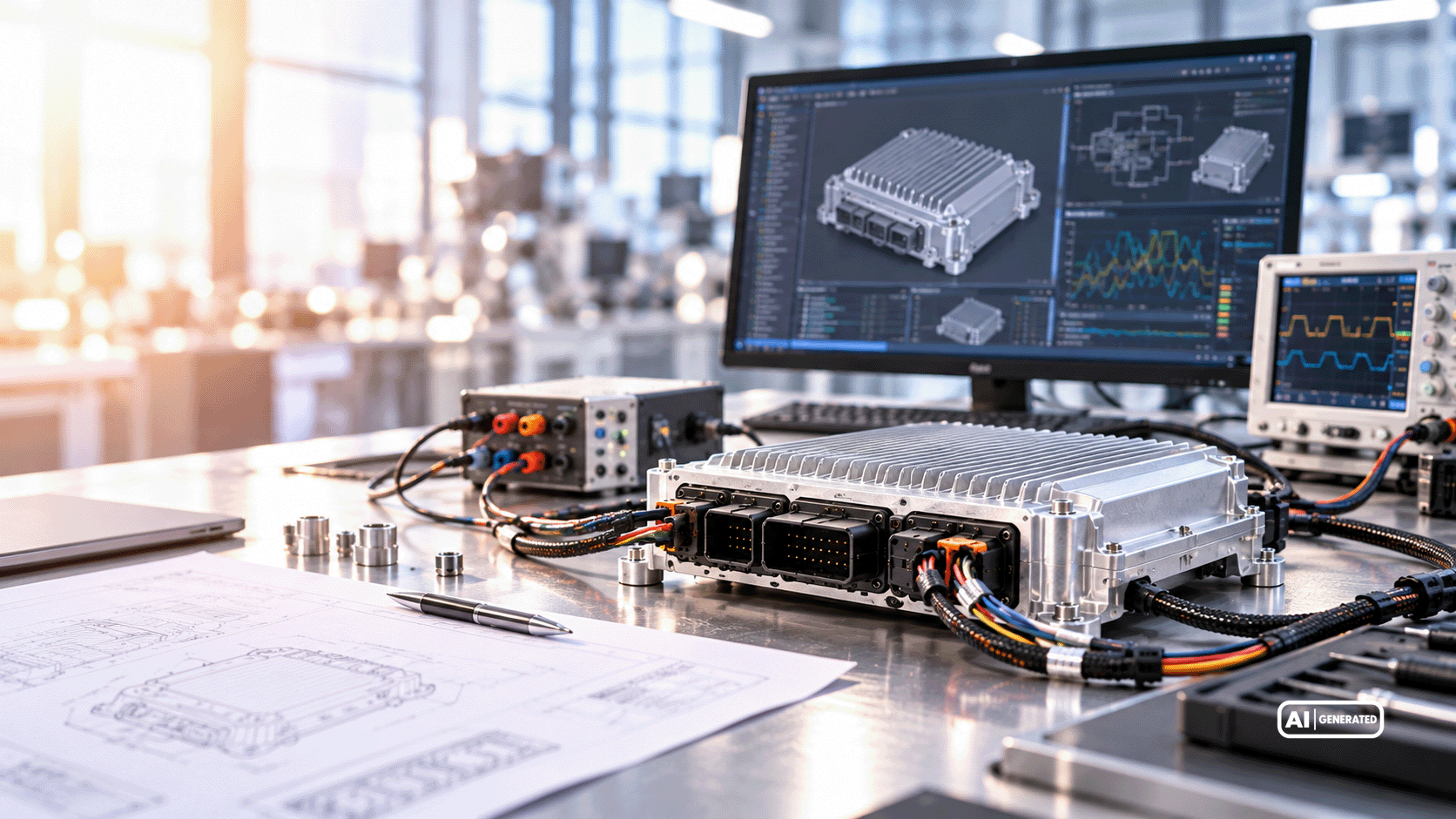
Developing electronic control units as complete products
An electronic control unit (ECU) acquires signals from sensors, processes them using electronics and software and, depending on the application, controls actuators. It can communicate with other systems and must perform its functions under the intended operating conditions.
Silver Atena develops custom electronic control units for demanding applications. We coordinate system architecture, hardware, embedded software and mechanics with functional safety, cyber security, test and qualification. Depending on the project, we support the product from concept and prototypes through to industrialisation and series production.
Challenges in the development of custom electronic control units
Many decisions have to work together in an ECU. A sensor signal is acquired by the hardware, processed by software and may trigger a response from an actuator. If an interface changes, several parts of this chain may be affected.
There are also requirements relating to installation space, power supply, thermal behaviour, electromagnetic compatibility and environmental conditions. In safety-relevant or connected applications, functional safety and cyber security influence the development process. The integrated ECU is verified against its requirements. The scope of qualification depends on the application and project.
- Defined interfaces
Sensors, actuators, communication and power supply must be coordinated with the overall system. - A common development status
Hardware, software and mechanics develop in parallel. Changes must be assessed across the disciplines. - Verification of the complete product
In addition to the individual components, we verify how they interact within the integrated ECU. - Preparing for series production
Manufacturability and product testing are considered during development.

Our ECU development services
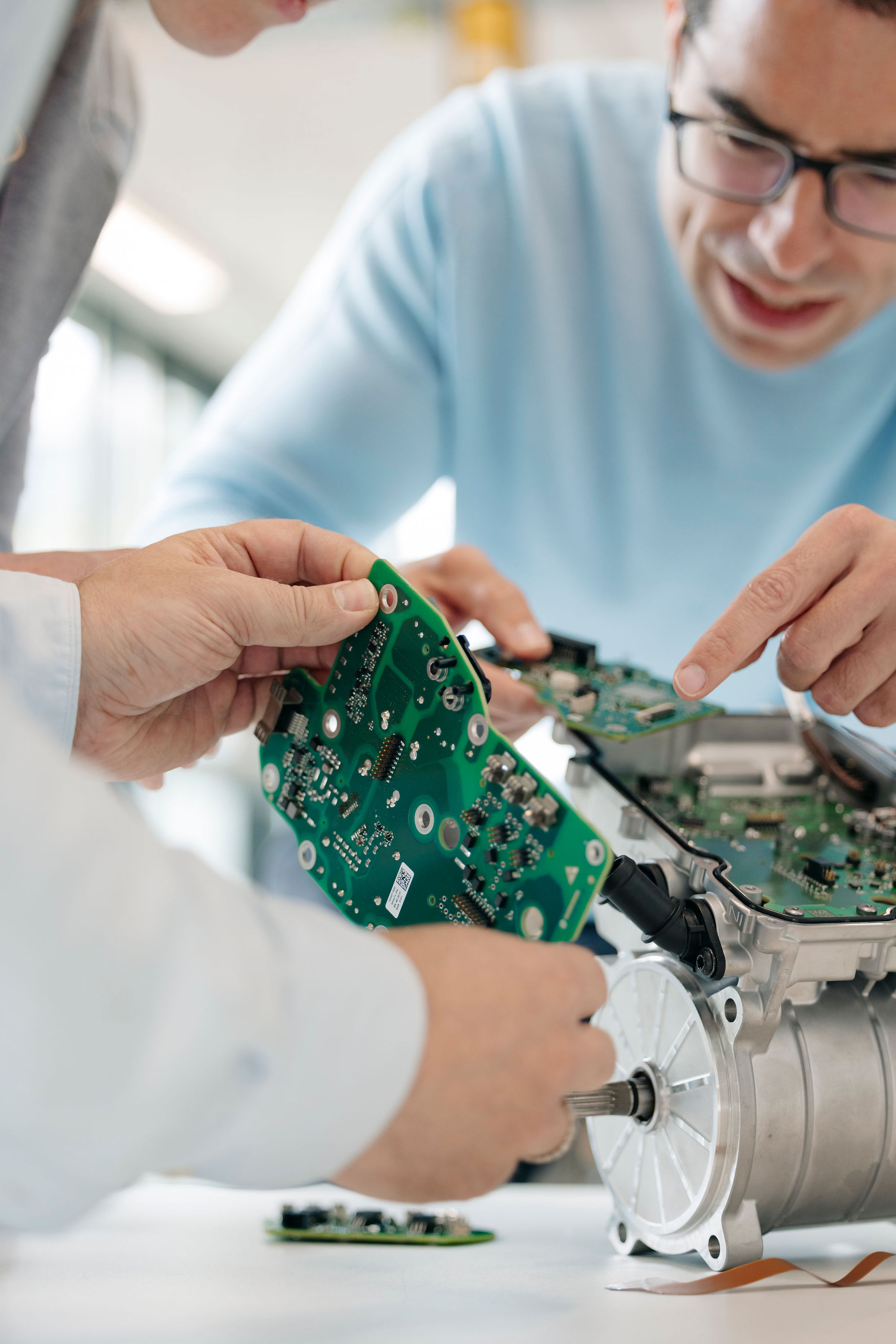
Silver Atena develops electronic control units as integrated products. Our work covers the technical concept, development of the required hardware and software, and their integration into a mechanical assembly.
Functions, interfaces and verification activities depend on the application. Depending on the scope of the project, Silver Atena can also provide verification, qualification, industrialisation, production and delivery of prototypes or series products.
Product concept and ECU architecture
We develop an ECU concept from the requirements. We define the functions and system boundaries and develop the architecture, including its hardware, software and mechanical elements as well as the interfaces to the higher-level system.
Requirements for power supply, communication, diagnostics and subsequent testing are also included in product planning.Hardware, software and mechanics
Silver Atena develops the electronics and embedded software for the ECU and coordinates them with the enclosure and mechanical interfaces. Depending on the product, this may include sensor and actuator interfaces, communication, protection and diagnostic functions.
Integrating safety and cyber security
Where required by the application, we consider objectives, measures and evidence for functional safety and cyber security during development. Their impact on architecture, hardware and software is coordinated with the relevant specialist teams.
Integrating and testing prototypes
With the first assemblies available, hardware, software and mechanics are integrated in the device. Functions and interfaces are checked; any deviations are returned to development for analysis and correction.
The integrated ECU is then verified against defined requirements. Environmental and EMC testing is planned according to the conditions of the intended application.Industrialisation and transfer to series production
We consider manufacturing and product testing during development. Depending on the project, Silver Atena supports the transfer to series production and can also produce and deliver prototypes or series products.
Development process from ECU concept to series production
The development steps are interconnected: findings from integration or testing may trigger changes to the architecture, hardware or software. The specific scope of development and verification is defined for each product.
- Clarify product requirements
At the outset, the function, operating conditions, interfaces and relevant safety requirements are defined. They form the basis for the architecture and development planning. - Develop the ECU concept
The product is structured technically. Functions are allocated and the interfaces between electronics, software, mechanics and the higher-level system are defined. - Develop and coordinate the disciplines
Hardware, software and mechanics are developed in parallel. The teams coordinate decisions relating, for example, to installation space, thermal behaviour, electronic interfaces and diagnostics. - Build and integrate the prototype
The first assemblies are commissioned. Software and other components are integrated and the intended functions are verified step by step. - Test and qualify the ECU
Tests, analyses and other verification activities confirm the requirements of the integrated product. The environmental, EMC and other qualification evidence required depends on the application and project. - Prepare the transfer to series production
Findings from development and qualification feed into the preparation of manufacturing and product testing. The scope of any subsequent production and delivery is agreed for each project.

Methods and standards in ECU development
Silver Atena develops its electronic products in line with the V-model: definition of requirements and architecture is followed by development, integration and the associated verification activities and evidence. The methods and standards applied depend on the product.
In the automotive sector, Automotive SPICE is used to assess development processes. ISO 26262 may be relevant for functional safety and ISO/SAE 21434 for cybersecurity engineering. In civil aviation projects, RTCA DO-178C may apply to software, DO-254 to airborne electronic hardware and DO-160 to environmental conditions and test procedures. IATF 16949 and EN 9100 relate to quality management systems. The specific requirements applied depend on the product, project scope and, where applicable, the certification context.
ECUs for Automotive, Aerospace and Defence
Automotive ECUs
Silver Atena develops electronic control units for applications including propulsion, chassis and energy systems. Depending on the application, functions, communication, diagnostics and safety requirements must be compatible with subsequent series production.
Aerospace ECUs
In aerospace, Silver Atena develops electronics for applications including flight and engine functions as well as actuation. Development, verification and qualification requirements depend on the function of the respective ECU.
Defence ECUs
For Defence applications, Silver Atena develops robust electronic systems and control units. Operating conditions, availability and intended service life influence product design and the required evidence.
Your benefits from end-to-end ECU development
- Align decisions with the complete product
Architecture, electronics, software and mechanics are considered in relation to the required function. - Clarify interfaces between disciplines
Collaboration between the development teams helps identify changes and dependencies at an early stage. - Verify complete product behaviour
Testing considers the integrated ECU and its requirements, beyond individual component tests. - Prepare for series readiness
Manufacturing and product testing are considered during development before the transfer to series production begins.
ECU development in combination with other competences
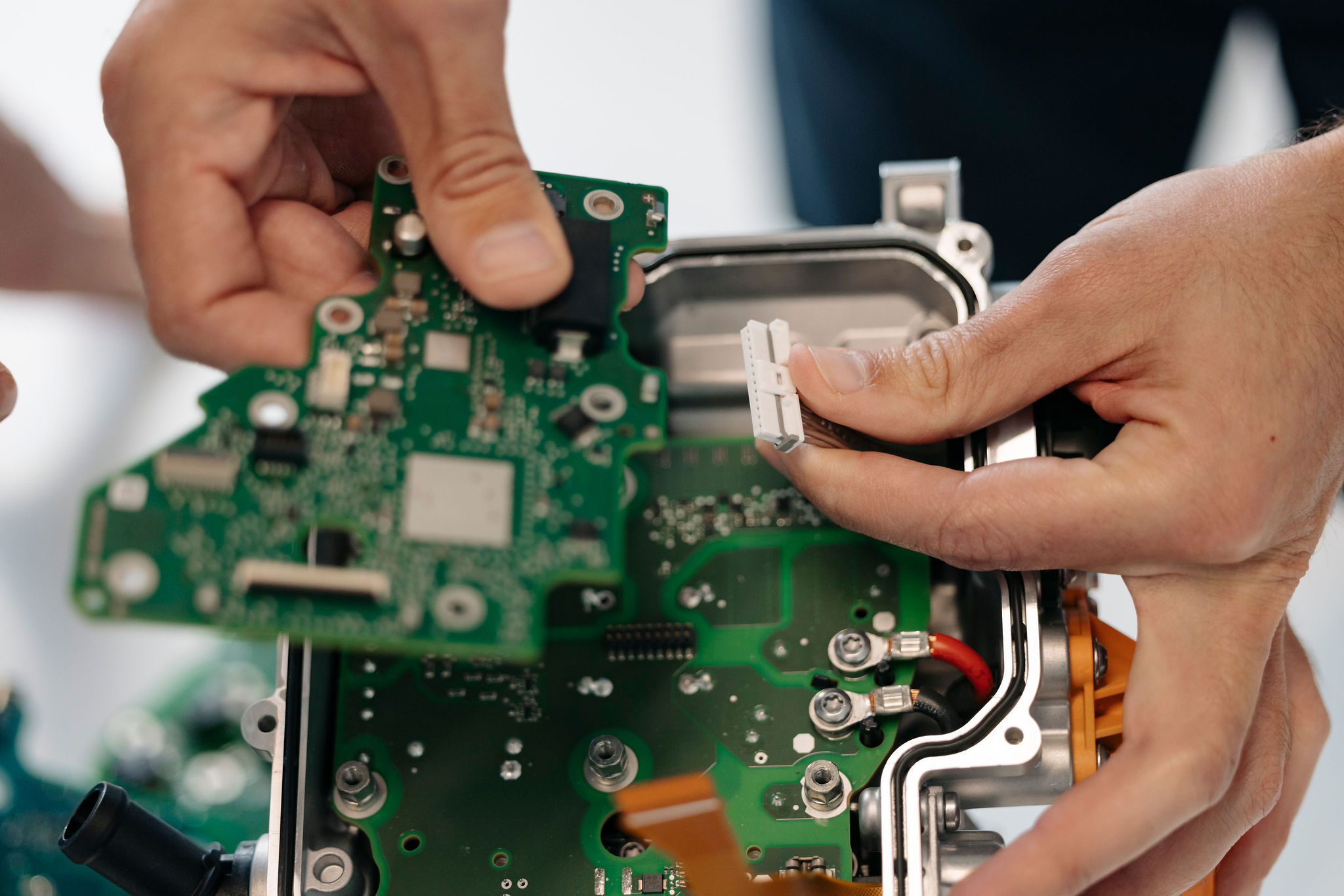
Several disciplines interact in the development of an ECU. System architecture and system integration define the technical structure and interfaces. Hardware development, embedded software and mechanical and enclosure development implement the respective elements of the product.
Where required, safety concepts are coordinated with functional safety and cyber security. Test and validation verify the integrated ECU; Environmental testing and qualification examine its behaviour under the required conditions. Industrialisation and series transfer prepare the product for manufacturing.
Why Silver Atena for ECU development?
Silver Atena combines its development disciplines with work on the complete electronic product. In addition to system, hardware and software development, our scope includes test and qualification.
Depending on the project, Silver Atena supports an ECU beyond prototypes and industrialisation through to production and delivery. This allows decisions on technical implementation, testability and manufacturing to be coordinated during development.

Develop a custom ECU
Do you need an ECU for an Automotive, Aerospace or Defence application? Silver Atena supports you with product concept, development, integration and verification as well as preparation for series production.