Control and Function Development

Develop functions and control behaviour systematically
An electric drive must meet its requirements within its intended operating range, even when load, temperature or supply conditions change. To achieve this, we describe the dynamic behaviour of the system, design the control strategy and assess its response to boundary conditions.
Silver Atena develops technical functions and control algorithms for electronic systems. We create models, analyse behaviour in simulations, adapt algorithms to sensors, actuators and available computing resources, and support their integration and verification within the overall system.
Challenges in controlling dynamic systems
Control systems must operate under different operating conditions. A motor responds to changes in load. Sensor signals may fail or become implausible. Actuating variables can reach their limits. The function must define appropriate behaviour for such cases.
A function therefore needs to describe more than the intended normal operation. Transitions, boundary conditions and fault responses are also part of the concept. For safety-relevant applications, these aspects are coordinated with functional safety.
- Behaviour under changing loads
Control algorithms are designed for the intended operating range and assessed under dynamic changes. - Limits of sensors and actuators
Measured values and actuation capabilities are not available without limits. These constraints need to be considered in the function. - Handling fault conditions
In the event of implausible signals or failures, system behaviour must be appropriate for the application and the applicable safety requirements. - From model to real system
Simulations enable early assessment. Measurements and tests on the real system verify whether the function meets the requirements under the intended conditions.


Services in Control and Function Development
Silver Atena develops control and functional behaviour for electric drives and other electronic systems. This includes physical modelling, algorithm development, signal processing, and the tuning and calibration of functions on the system.
This competence focuses on functional behaviour: How should the system respond to inputs, changes of state and disturbances? Software architecture, drivers and hardware-related implementation are handled by embedded software development. Both disciplines coordinate the implementation of the algorithms closely.
Functional requirements and control concepts
We derive the required functional behaviour from the system requirements and define the conditions under which it must apply. Based on this, we develop a closed-loop or open-loop control concept.
This includes clarifying the required sensor signals, actuating variables, operating states and interfaces to other functions.Physical modelling and simulation
Models represent the aspects of system behaviour that are relevant to the function. Simulations allow different control approaches to be compared and responses under different operating conditions to be analysed before the complete product is available.
A model is based on assumptions and does not replace testing on the real system. It helps to select critical cases and test conditions systematically.Control algorithms and signal processing
Silver Atena develops algorithms for processing measured values and calculating actuating variables. Depending on the application, this may include current, speed, torque or position.
This also includes evaluating signal plausibility, state transitions and limitations. The specific function depends on the respective product.Calibration and behaviour at operating limits
Control parameters are tuned to the system. We consider the intended operating range as well as cases in which loads change, signals become implausible or actuating variables reach their limits.
Assessment is first carried out using the model and subsequently, where required for the function, on the real system.Integration and function verification
Function models and algorithms are coordinated with Embedded Software Development for implementation on the control unit. Model-in-the-Loop, Software-in-the-Loop and Hardware-in-the-Loop tests can be used to assess behaviour at different stages of development. The test levels used depend on the project.
For test benches and tests of the integrated product, we work with test systems and test bench development and test and validation.
Development process for control algorithms and technical functions
Development starts with the required system behaviour. Simulation, implementation and measurement then provide findings that are used to further develop the concept and its parameters.
- Define functional behaviour
We clarify which inputs, outputs and operating states are relevant to the function. Boundary conditions and requirements for fault responses are also identified. - Model system behaviour
The physical relationships relevant to the control function are represented in a model. The required level of detail depends on the specific question being addressed. - Develop and simulate the control strategy
Based on the model, algorithms are designed and assessed in different scenarios. Simulation results help refine the concept and its parameters. - Coordinate implementation on the control unit
We coordinate implementation of the function with Hardware Development and Embedded Software Development and integrate it on the control unit. Available sensor signals, actuating variables and target-system resources must be taken into account. - Verify and calibrate behaviour
Tests at model, software, test-bench or system level show how the function responds under the required conditions. The findings are fed back into the algorithm and calibration.
Methods and tools in control development
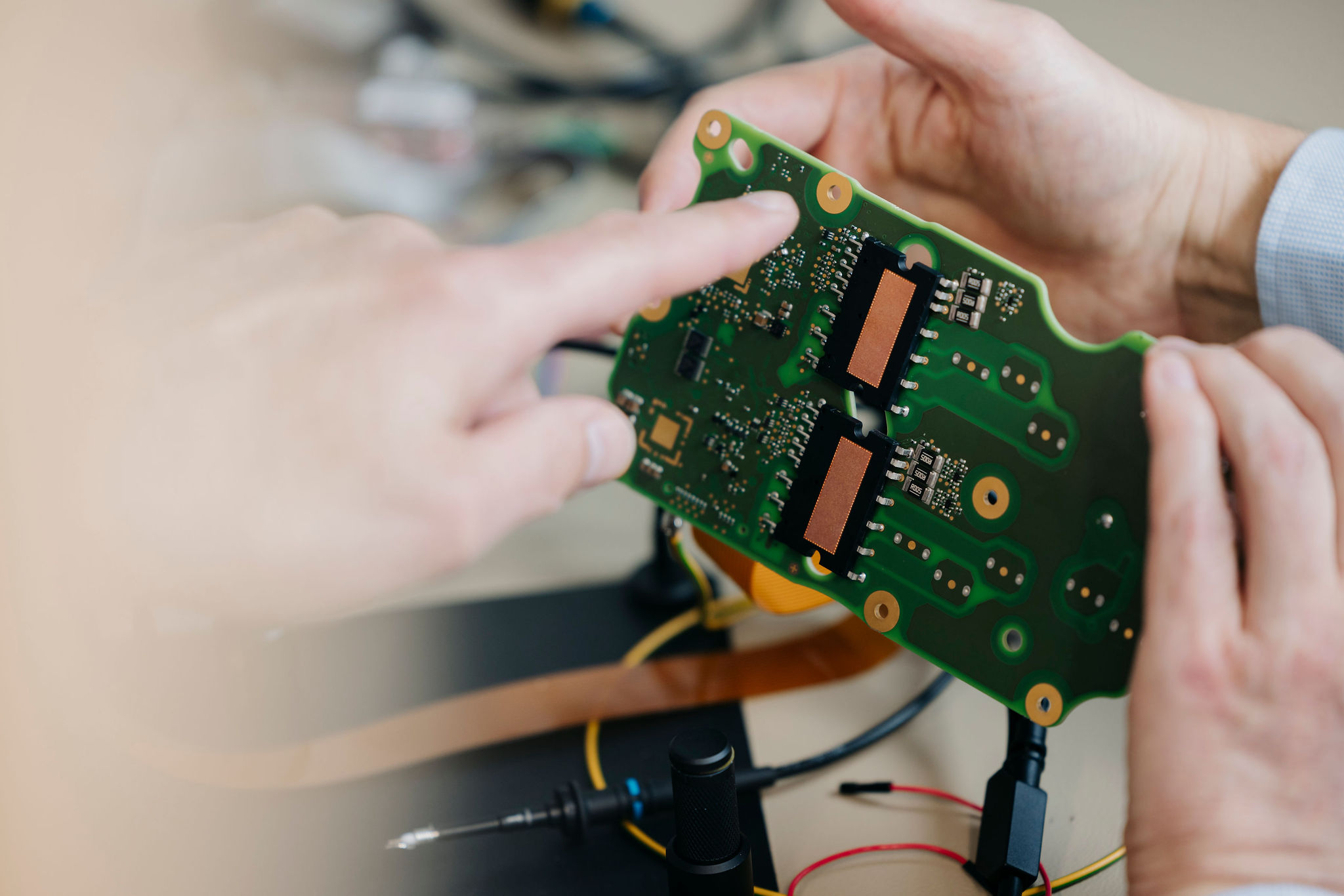
Silver Atena uses both classical and model-based development methods. The technical basis of this competence includes physical models, simulations, algorithm development, calibration, and the assessment of robustness and boundary conditions. Model-in-the-Loop, Software-in-the-Loop and Hardware-in-the-Loop tests can support verification at different stages of development.
For safety-relevant functions, development is based on the requirements of the respective project. ISO 26262 may be relevant for function development in safety-related electrical and electronic vehicle systems. Automotive SPICE is used to assess development processes. For aerospace applications, development and verification requirements are defined according to the function, its safety relevance and the certification context.
Control functions for Automotive, Aerospace and Defence
Automotive
Electric drives, chassis systems and energy systems require functions that respond to changing conditions. Depending on the application, this may involve controlling current, speed or torque and coordinating the function with sensors and actuators.
Aerospace
Closed-loop and open-loop control functions can be used, for example, in electric actuation, flight and engine systems or power supply systems. Further applications depend on the specific system. The required development and verification activities depend on the respective function and its safety requirements.
Defence
In Defence applications, a function must also respond in a defined manner within its intended operating range. Variable loads and demanding environmental conditions can influence the design and verification of the control strategy.
Your benefits from model-based function development
- Assess behaviour before the hardware is complete
Models and simulations enable functions and control approaches to be assessed at an early stage. - Test boundary conditions systematically
Load changes, sensor faults and limitations can be included in development and test planning. - Tune parameters on the system
Calibration connects the developed control concept with the behaviour of the real application. - Prepare integration
Defined signals, states and interfaces support coordination between function, hardware, software and test.

Control development in interaction with hardware, software and safety
Requirements engineering describes the required behaviour. System architecture and system integration place the function within the overall system. Hardware development provides sensor, communication and power interfaces, among other elements.
Control and Function Development defines how the system should respond to inputs and states. Embedded software development implements the algorithms on the control unit and integrates them there. For safety-relevant functions, we coordinate limits and fault responses with functional safety. Cyber security requirements are considered where they affect the function.
Test systems and test bench development and test and validation support verification from the function model through to the integrated product.
Why Silver Atena for Control and Function Development?
Silver Atena develops control concepts and algorithms in conjunction with electronic hardware, embedded software and system testing. This allows a function to be aligned with the available interfaces and subsequent integration from an early stage of development.
Our experience with electric drives and safety-critical electronic systems connects model-based development with the assessment of behaviour on test benches and in the product. The specific application determines which development and test steps are required.
Discuss your control concept or function
Are you developing an electric drive, actuator or another controlled system? Silver Atena supports you with functional requirements, modelling and control algorithms, as well as their integration and verification.