Test Systems and Test Bench Development for Electronic Control Units

Testing control units before the overall system is available
How can a control unit be developed and tested when the vehicle or aircraft around it is not yet available? This requires a test environment that provides the unit under test with the signals and interfaces it needs and can trigger defined responses.
Silver Atena develops, builds and operates customised test systems: from development and integration test benches and hardware-in-the-loop (HiL) systems to end-of-line (EoL) test benches for production. These make it possible to examine functions and interfaces under controlled conditions and to carry out tests repeatably.
What requirements must a test bench meet?
A test is only as meaningful as its test environment. If a test bench sends a signal at the wrong time, simulates a load incorrectly or records measured values unreliably, the result may be misinterpreted. A test bench must therefore suit the product and the planned tests.
Which parts of the later environment are physically present, and which are simulated? Which signals, interfaces, loads and fault states does the unit under test require? For a control unit, sensor and bus signals may be the main focus. An inverter also requires power interfaces and the emulation of, or connection to, an electric machine, while an actuator may require mechanical loads.
The requirements shift depending on the development phase. In early phases, the test bench often replaces parts of the system that are still missing. In HiL testing, the simulation must reproduce the relevant characteristics with sufficient accuracy and in real time, with suitable step sizes and timely signal acquisition and output. An EoL test bench must carry out recurring tests under production conditions and suit the manufacturing process.
The test bench itself must also be kept under control. Changes to hardware, software or configuration can influence test results. Depending on the project, verification, calibration and configuration control of the test equipment are therefore required.


Services in test system and test bench development
Silver Atena combines knowledge of the product to be tested with the development of the test infrastructure required for it. A test bench concept is developed on the basis of the product, its interfaces and the planned tests. It defines which signals, loads and measured variables are required, which parts of the system are simulated and which requirements apply to safety, operation and expandability.
The test environments cover different phases of the product life cycle: from the early investigation of individual functions to series production.
Development and integration test benches
Development test benches provide interfaces and operating conditions so that hardware or software can be commissioned, even if the system is still incomplete. Integration test benches are used to examine the interaction of components before the overall system is available.
Hardware-in-the-loop test benches and environment simulation
On the HiL test bench, a real control unit is connected via its interfaces to a real-time simulation of its environment. The test system captures the outputs of the control unit and provides the simulated response as input signals. This allows defined scenarios to be repeated without setting up the complete application system. Depending on the task, this includes residual bus, signal and load simulation as well as the reproduction of specified fault states. The limits of the simulation are taken into account when assessing the results.
End-of-line test benches for series production
An EoL test bench tests products at the end of the manufacturing process and is designed to detect relevant manufacturing and assembly defects as well as deviations in selected product characteristics. It does not replace complete development verification or product qualification. Silver Atena develops and operates EoL test benches for its own applications and for customer projects, aligning test scope, contacting, test sequence and data acquisition. Depending on the manufacturing concept, we also take into account cycle time, the unambiguous assignment of test results to the product and the handling of defective products or products that need to be retested.
Electrical, electronic and mechanical design
Silver Atena develops the electrical and electronic components of the test bench and integrates mechanical components and test adapters to suit the product and the place of use.
Test bench software and test automation
The software controls and monitors the test sequences and combines simulated signals, test sequences and measurement data acquisition. Automated sequences make tests repeatable under comparable conditions.
Commissioning, operation and expansion
After assembly and integration, the test bench is commissioned and checked against its requirements. Acceptance and release follow the project specifications. Silver Atena also supports test benches with operation, maintenance and expansions when the product or test requirements change.
From test bench requirements to a ready-to-use test environment
Development begins with coordination between product development, testing and test bench development. It is defined which characteristics of the unit under test are to be examined and which environment is required for this. This results in the requirements for interfaces, signals, loads, simulation and measurement.
The electrical, electronic, mechanical and software components are then developed and integrated. During commissioning, it is checked whether the test environment correctly provides the intended states and records results as planned.
In later use, configuration remains important: a modified product or a new test case may require adjustments to the test bench. Maintenance, verification and documented changes help to maintain the significance of the tests throughout the service life.
Methods and project-relevant requirements for test equipment
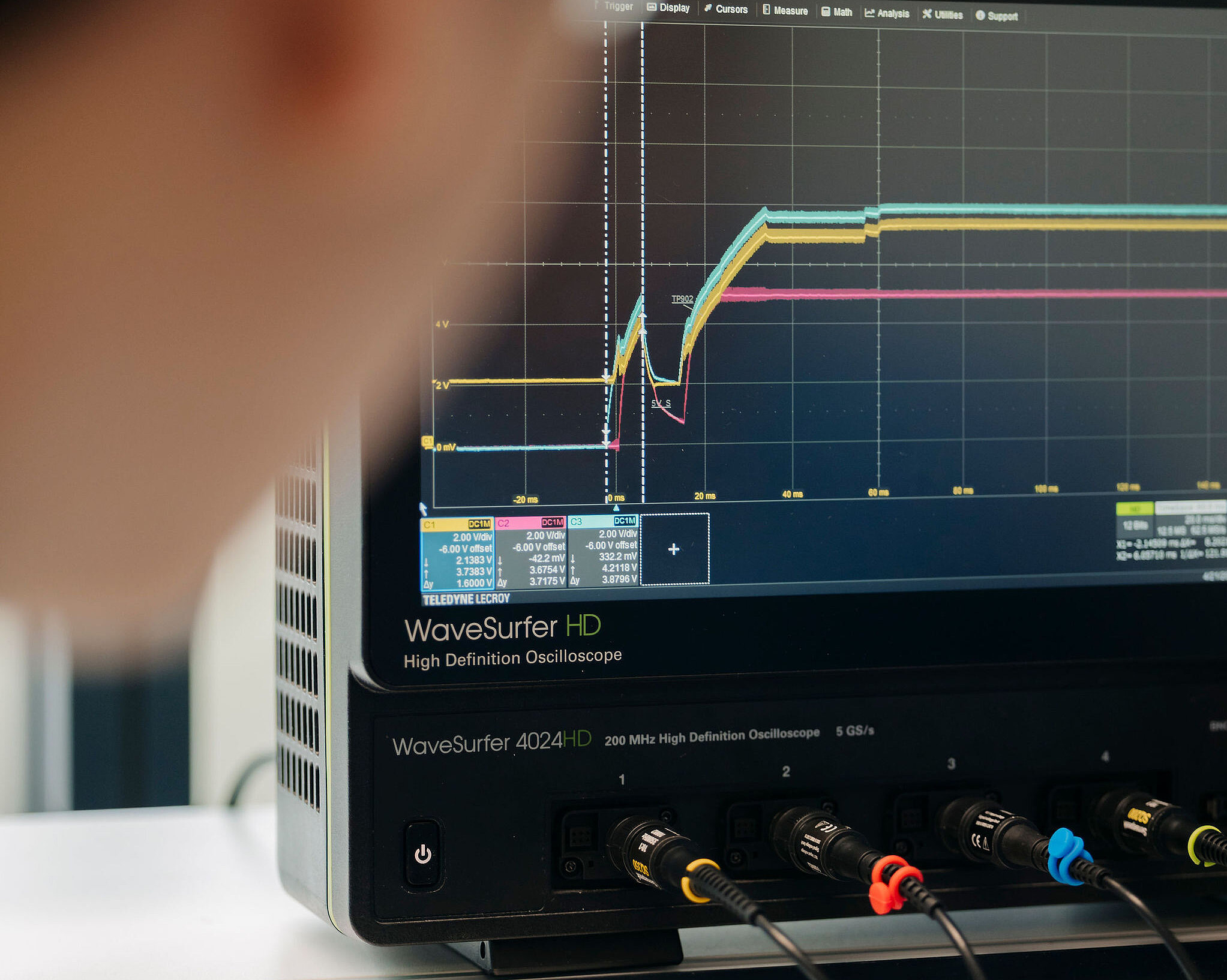
Relevant aspects for test systems include interface and signal specification, simulation, measurement data acquisition, test automation and the verification of test equipment. The calibration and configuration control measures required depend on how the test bench is used and the respective project requirements. We align measuring ranges, accuracy and, where applicable, measurement uncertainty with the product characteristics to be verified and their limits. We document the relevant product, test bench and software versions together with the test results.
For safety-related automotive products, ISO 26262 can impose requirements on the software tools used and the confidence in them. Automotive SPICE is used to assess development processes.
In civil aviation projects, RTCA DO-178C or DO-254 may give rise to requirements for the development and verification tools used. Whether tool qualification or further evidence is required depends on how the tool is used and how its results are verified. In the context of DO-178C, RTCA DO-330 may be relevant for the qualification of software tools.
Test systems for automotive, aerospace and defence
Silver Atena develops test systems for applications including inverters, actuators, DC/DC converters, hydrogen control units, engine controllers and chassis components. Each test system is designed for the specific technical task.
Automotive
In the automotive sector, HiL, control unit, inverter and EoL test benches may be required. Bus communication, electrical loads and integration into development or production processes determine the respective design.
Aerospace
In aerospace projects, the characteristics of the test environment and the traceability of the test play an important role.
Defence
For defence applications, flexible test systems may be required that support project-specific interfaces and requirements over a long product life cycle.
Advantages of customised test benches
A suitable test environment makes development testing possible before the complete application system is available. Defined signals and reproducible sequences help to examine functions and interfaces under comparable conditions. Automation can simplify recurring tests and extend the possible scope of testing.
The result is a test infrastructure tailored to the product and its development status. In the event of later adjustments, existing test set-ups can continue to be used if the technical requirements allow. Any time or cost advantages that result depend on the specific project.
Cooperation with development, testing and production
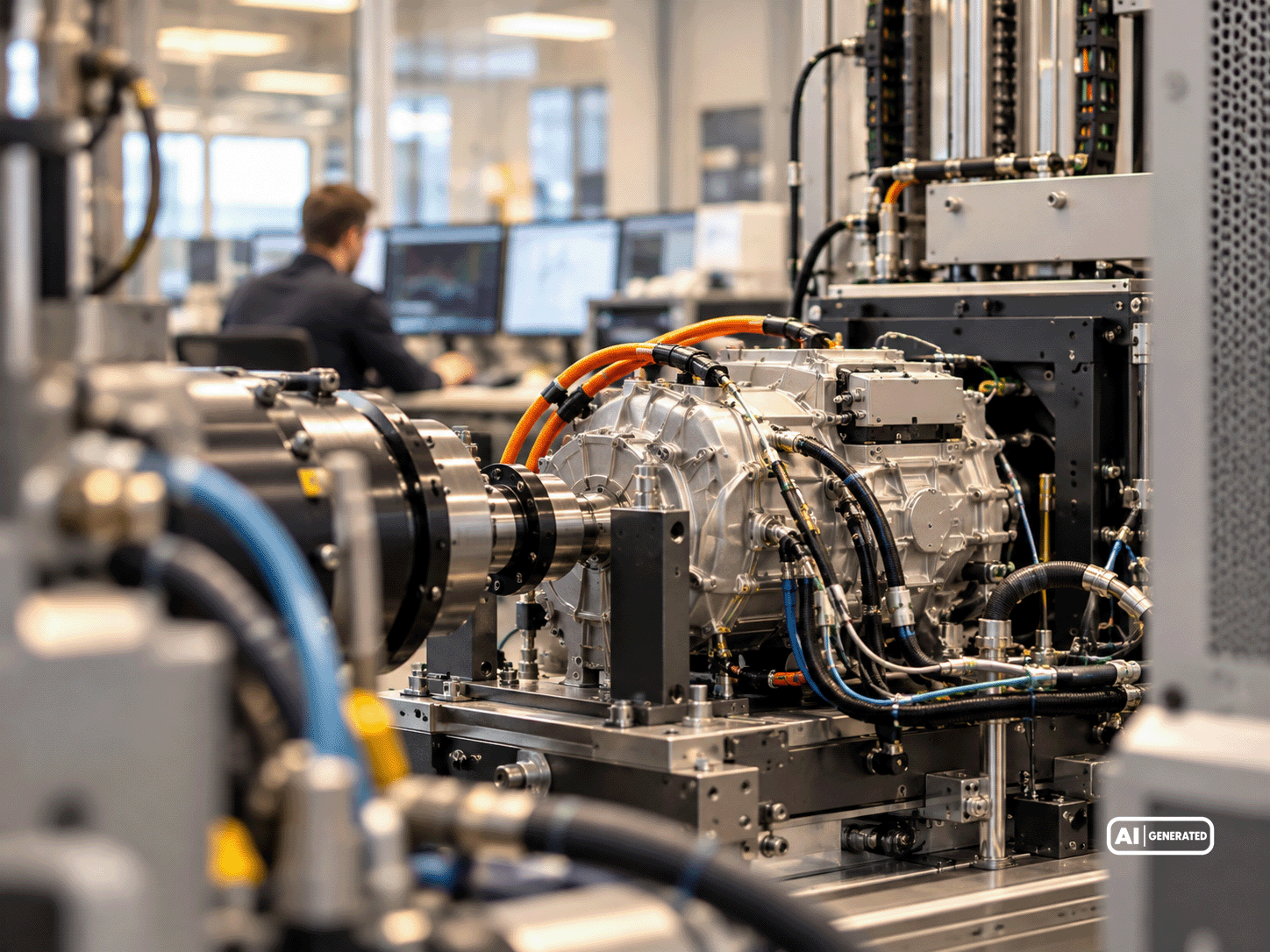
The requirements for a test bench arise from the product and the planned tests. That is why test bench development works together with system architecture and system integration, hardware development, embedded software, and control and function development. These departments provide the knowledge of interfaces, functions and relevant system behaviour.
Test bench development provides the technical test environment. Test and validation defines the product-related test cases and evaluation criteria and reports back which states and measurements are required for this. For EoL test benches, industrialisation and transition to series production and production are also involved. In this way, the test bench is not developed in isolation, but linked to its later use.
Why Silver Atena for test bench development?
Silver Atena develops both electronic products and the infrastructure for testing them. This makes it easier to exchange information about product behaviour, interfaces and possible fault states. Experience from hardware, software, control engineering, testing and production can be incorporated into the test bench concept. Depending on the project, Silver Atena takes on the conception, development, construction, commissioning, operation and expansion of the test environment, from development and system test benches to EoL solutions.

Discuss a test bench for your development or production project
Do you need a test environment for a new control unit, want to test functions before system integration or develop an EoL test bench? Silver Atena helps you define the requirements for the test bench and implement a suitable solution.