Hydrogen & Fuel Cell Electronics
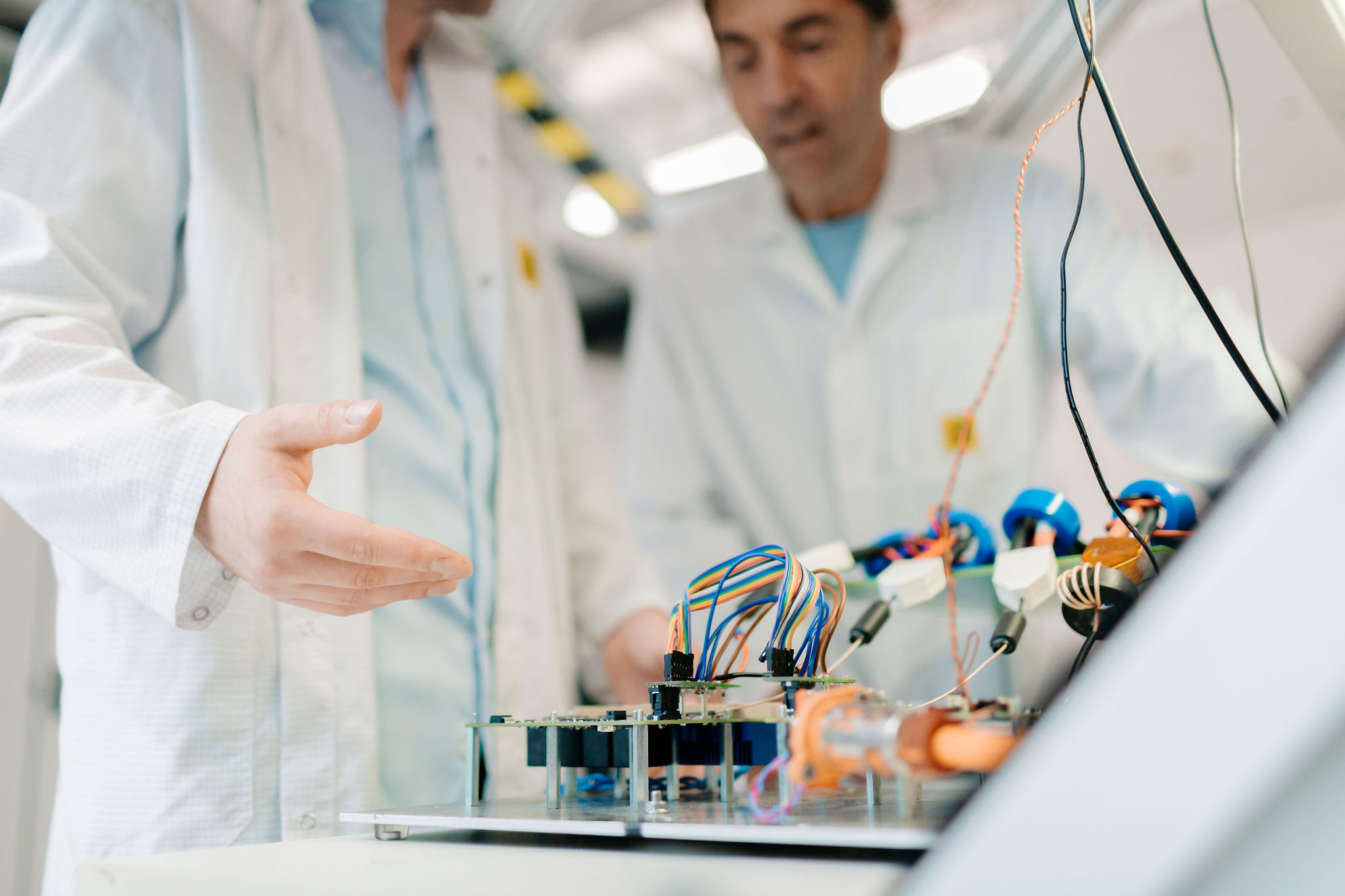
Electronics for hydrogen and fuel cell systems
Hydrogen and fuel cell systems connect the tank system, sensors, valves, fuel cell, power electronics and power supply. Electronics monitors operating parameters, controls components, detects faults and adapts the electrical energy to the higher-level system.
Silver Atena develops the electronic parts of such systems, combining system architecture, control unit development, DC/DC converters, embedded software, safety, testing and qualification. The specific scope of services depends on the application, system boundary and project requirements.
Challenges in hydrogen and fuel cell systems
In hydrogen systems, tank pressure, temperature, valve states, hydrogen concentration and other relevant operating parameters must be reliably captured and evaluated. At the same time, the system needs defined responses to deviations, faulty signals and the failure of individual components.
Fuel cell systems add electrical integration. The voltage and power of the fuel cell change with load, temperature, operating state and ageing. The power electronics must condition this energy for the on-board power system, a DC link or other consumers. This creates close dependencies between the tank system, fuel cell, auxiliary units, control units and power supply.
- Monitoring states: Pressure, temperature, flow and valve positions are captured, checked for plausibility and evaluated within the system logic.
- Providing energy: Fuel cell, DC/DC converter and higher-level energy system are aligned in terms of voltage, power and dynamic operating states.
- Handling faults: Diagnostics and defined fault responses support a controlled transition to the intended operating or safe state.
- Considering safety: Hazards and safety requirements are incorporated into architecture, hardware, software and verification at an early stage.


Services for hydrogen and fuel cell electronics
System and control unit architecture
The starting point is the functional, electrical, thermal and safety-related requirements, which are structured and managed by requirements engineering. The system architecture defines functions, system boundaries, energy paths and interfaces between control units, sensors, actuators, power electronics and higher-level systems. Depending on the application, development considers aspects such as tank and system states, communication interfaces, voltage levels, diagnostics, monitoring and fault responses, safety and security requirements and the integration and verification strategy.
Tank control units for H₂ and LH₂
Tank control units capture information from the tank system and control or monitor the connected functions. Possible tasks include pressure, temperature and tank state monitoring, sensor processing and plausibility checks, valve control and monitoring, tank-side monitoring during refuelling, diagnostics, communication and defined fault responses. The tasks performed by the control unit depend on the tank architecture, storage medium and overall vehicle or plant architecture. H₂ pressure tanks and cryogenic LH₂ systems place different requirements on the electronics.
DC/DC converters for fuel cell systems
A DC/DC converter couples the fuel cell to the higher-level electrical system. It adapts voltage and energy flow to the requirements of the on-board power system, DC link or energy storage. The design must take into account the static and dynamic behaviour of the fuel cell. Depending on the application, this includes input and output voltage, rated and peak power, load profiles, efficiency and power loss, control, galvanic isolation, insulation and protection functions, EMC and thermal design, as well as diagnostics and integration into the high-voltage system.
Power supply and energy management
The power supply integrates the fuel cell system into the electrical architecture of the vehicle, aircraft or plant. In hybrid systems, energy management coordinates the fuel cell, energy storage and consumers where applicable.
Balance of plant
A fuel cell requires auxiliary components for media supply, temperature management and operation, such as sensors, valves, pumps, compressors or fans, depending on the system. Control and electronics integrate these components into the operating strategy, diagnostics and monitoring.
Embedded software and diagnostics
The embedded software processes sensor signals, generates actuator commands and monitors system states. Diagnostic functions detect deviations and faults and initiate the system responses defined in the requirements.
Safety and security
Faults in tank monitoring, valve control, sensors or power supply can affect the function and safety of the overall system. Safety engineering and cyber security therefore derive project-specific requirements for architecture, hardware, software, communication and verification. Possible measures include plausibility checks, sensor and actuator diagnostics, monitoring of relevant operating parameters, redundancy, communication monitoring and defined safety responses. In hydrogen applications, hazard analyses and requirements for explosion protection and zone classification may also be relevant.
Development process for hydrogen electronics
Development starts with the hydrogen or fuel cell function and its integration into the higher-level system. A typical process comprises the following steps:
- Analyse and validate requirements and system function: Functional, electrical, thermal and safety-related requirements are analysed and validated. System boundaries, tank system, fuel cell, sensors, actuators, power supply and communication are taken into account.
- Define the system and control unit architecture: Functions are allocated to system elements. Depending on the project, control units, sensors, actuators and power electronics are developed, specified or selected. Energy paths, interfaces, diagnostics and fault responses are defined.
- Develop hardware and power electronics: Hardware development implements processing units, electrical interfaces, monitoring and protection circuits. If part of the scope, the required DC/DC power electronics is also developed.
- Develop embedded software and control functions: Control, monitoring, regulation and diagnostic functions are implemented on the target hardware and verified against their requirements.
- Integrate components and system: Control units, sensors, actuators, power electronics and higher-level systems are brought together step by step. Function, communication and electrical interfaces are tested in the process.
- Verify and qualify functions: Testing and validation check system behaviour against defined requirements and fault cases. Test systems and environmental testing support reproducible functional and environmental compliance demonstration.

Standards and regulations for hydrogen and fuel cell systems
The applicable standards and legal requirements depend on the application, industry, storage medium, place of use and certification basis. The following overview lists possible reference points. The applicable issues and evidence are defined for the specific project.
- Road vehicles: ISO 26262 for functional safety and ISO/SAE 21434 for cyber security of electrical and electronic systems in road vehicles.
- Hydrogen vehicles: UN GTR No. 13 for hydrogen and fuel cell vehicles. National or regional implementing regulations must also be checked.
- Compressed hydrogen containers: ISO 19881:2025 for series-produced, refillable compressed hydrogen containers in road vehicles. The standard does not apply to LH₂ systems, aviation or stationary storage.
- Fuel cell technology: Depending on the part, the IEC 62282 series covers aspects such as safety, performance and test methods for fuel cell systems. The appropriate part must be selected based on the application.
- Potentially explosive atmospheres: ATEX and IECEx requirements may be relevant depending on the place of use, zone classification, product type and jurisdiction.
- Aviation and other industries: Aerospace, defence or stationary applications require their own project-specific standards and certification requirements.
Applications of hydrogen and fuel cell electronics
Hydrogen and fuel cell electronics is used in mobile and stationary energy systems. Typical fields of application include:
- H₂ and LH₂ tank control units
- Monitoring of hydrogen tank systems
- Fuel cell vehicles and mobile energy systems
- DC/DC converters and fuel cell power supply
- Sensor, valve and balance-of-plant electronics
- Electric or hybrid aircraft propulsion with fuel cells
- Stationary fuel cell systems
For electric and hybrid aircraft propulsion, there is an interface with electric and hybrid aircraft propulsion.
Benefits for hydrogen and fuel cell projects
- Clarifying system boundaries: Tank, fuel cell, electronics, auxiliary units and power supply are considered within a common architecture.
- Defining interfaces early on: Electrical, functional and communication interfaces are aligned before integration.
- Defining fault behaviour: Diagnostics, plausibility checks and responses to deviations are derived from the requirements and verified.
- Combining development and testing: Hardware, software, power electronics, safety and testing work on the basis of common requirements and evidence.

Hydrogen electronics across engineering disciplines
- Requirements engineering and system architecture structure requirements, functions and interfaces.
- Control unit development combines hardware, embedded software, sensors, actuators and diagnostics.
- Power supply, power electronics and DC/DC converters handle electrical integration and power conversion.
- Safety, EMC and thermal management, testing and environmental testing complement functional development with the required analyses and evidence.
Why Silver Atena for hydrogen and fuel cell electronics?
Cross-disciplinary development
Silver Atena brings together system architecture, control unit development, embedded software, power electronics, safety and verification through common requirements and interfaces.
Development through to integration and qualification
Depending on the project, our scope of services ranges from requirements analysis and architecture through hardware, software and DC/DC converters to integration, testing and qualification.

Hydrogen and fuel cell electronics for your project
Are you looking to develop or integrate tank control units, fuel cell power electronics or other electronic functions for hydrogen systems? Discuss your requirements and the development scope you need with our team.